Author: JohnGrahamTours

  • Kriste Aghdga [Christ is Risen] in English

    Kriste Aghdga [Christ is Risen] in English

    Kriste aghdga (Christ is Risen) is an important Easter hymn in the Georgian Orthodox tradition. Many musical variants of the paschal troparion exist, as detailed on our main page, which includes a pronunciation guide, videos, notation, and performance practice tips!

    But sometimes, a choir is looking to sing Orthodox music set in the English language. On this page, we present arrangements of the Georgian paschal troparion in English, with discussion on the editing process.

    Enjoy, and please leave your comments!
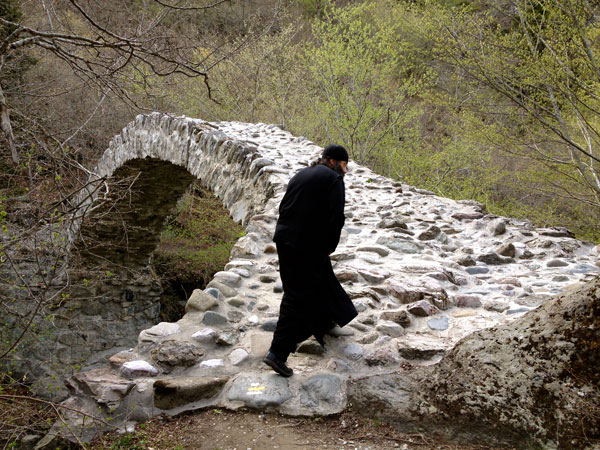
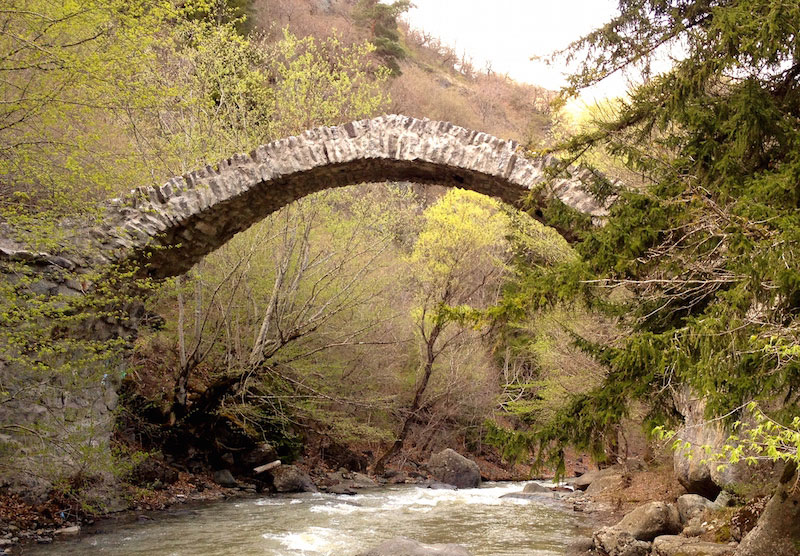
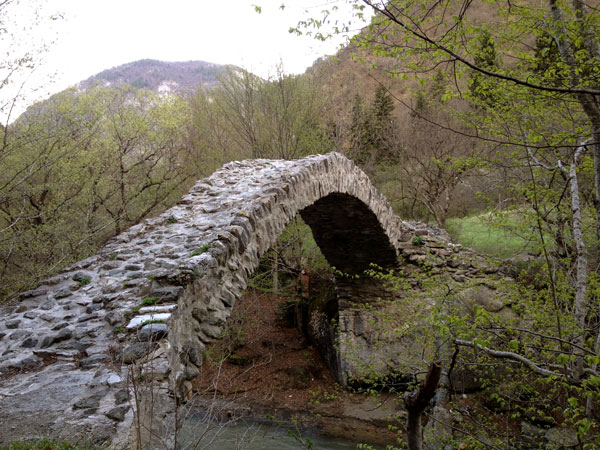
    Georgian monk walks across medieval Rkoni single-arch "Tamar" bridge near Rkoni Monastery, Georgia. Seen on John Graham Tours.

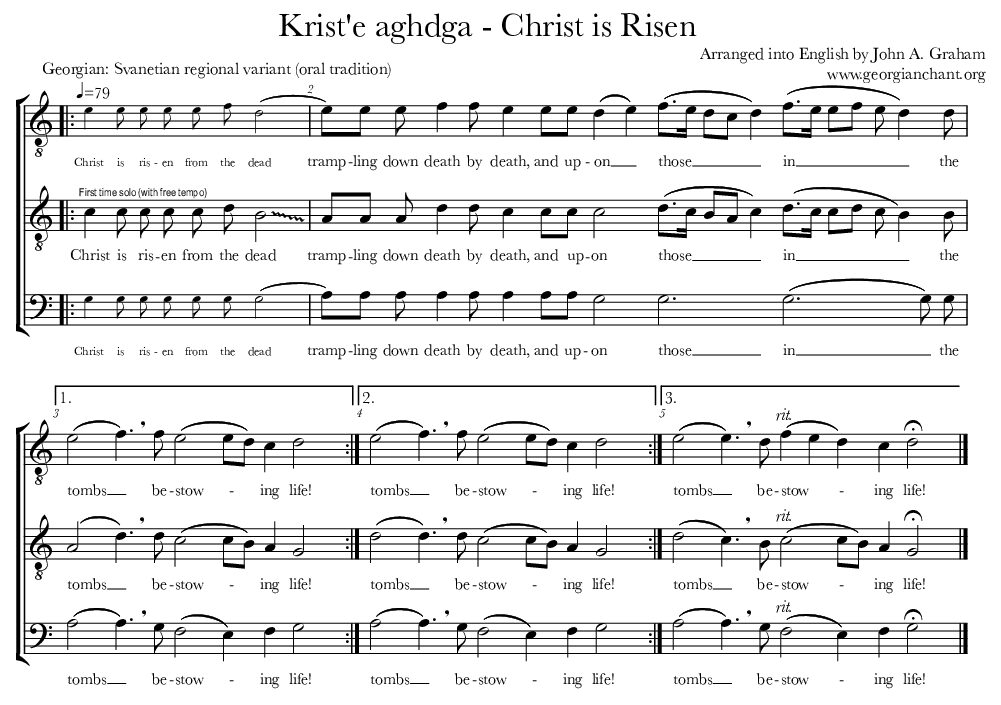
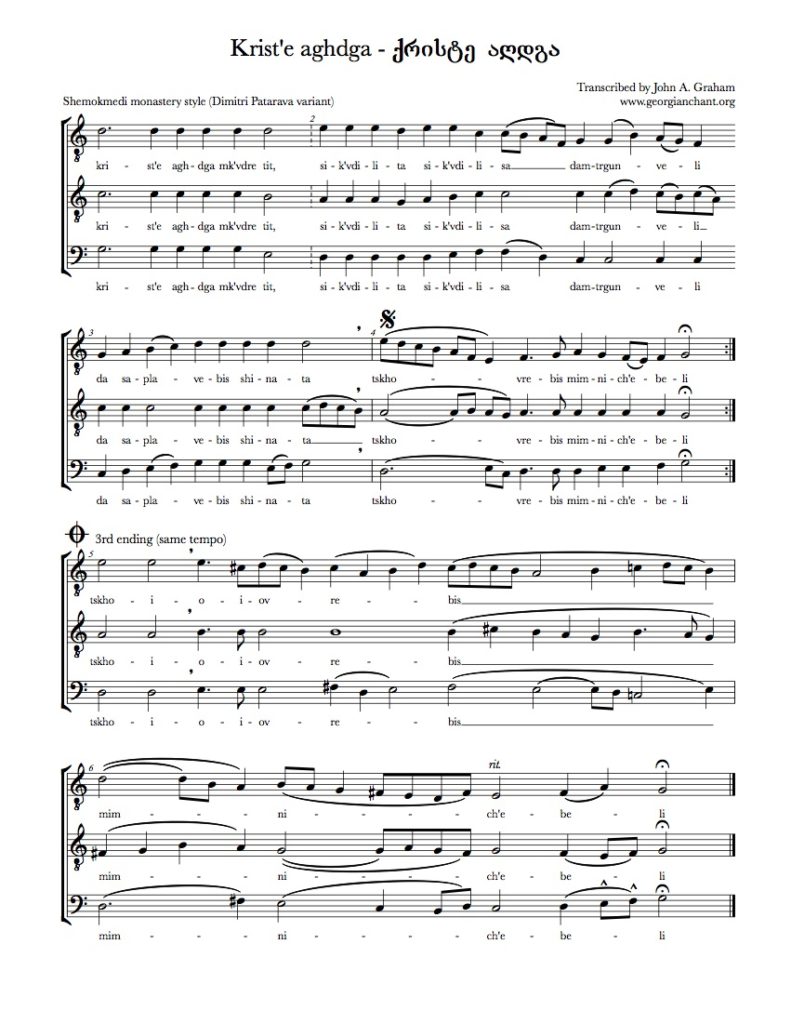
    English Notation:

    Arrangement Process

    The first challenge for an arranger is to find a suitable compromise between the translated text and the original music without losing the integrity of either.

    An arranger needs to think about the following:

    • Identify syllable count differences in the text;
    • Identify places where the music can be changed-modified-adapted to the new text;
    • Attempt to set important words to important climactic musical moments;
    • Identify musical moments that should be retained as integral to the piece, vs. moments where music can be changed to serve the text-setting requirements.
    • Balance important musical moments vs. important text;


    In this chant, the Georgian text has 34 syllables while the English text only has 24 syllables. The four-syllable word sikvdilita in Georgian translates as the one-syllable word death, while the word saplavebis translates as tombs. This is actually a good problem to have, as having more syllables of text than the original would present additional challenges.


    Georgian: kriste aghdga mkvdretit, sikvdilita sikvdilisa, damtrgunveli da saplavebis shinata tskhovrebis mimnichebeli!

    English: Christ is risen from the dead, trampling down death by death and upon those in the tombs restoring life!


    The Georgian chant emphasizes the word tskhovrebis (life) with a long held musical note at the beginning of measure 4. Unfortunately, in the English translation, the word life is at the very end of the text, so there is no avoiding its setting as the final note of the piece. The arranger must choose at this point which English word to place in the climactic musical moment in measure 4.

    The choices are few. It can either be tombs or be-stow-ing. As one can see, I chose tombs, which forces the words those in the into a highly melismatic arrangement to cover the ten notes preceding, in measure 3. The text bestowing life can then be spread evenly over the final cadential bar, which to my sensibilities feels more appropriate than the other available options.

    So the challenge for the arranger is two-fold:

    With less syllables, where are we going to spread out the English text, and with different moments of emphasis in the two texts, how are we going to set the English text appropriately, without dramatically changing the source music?


    Georgian Notation:
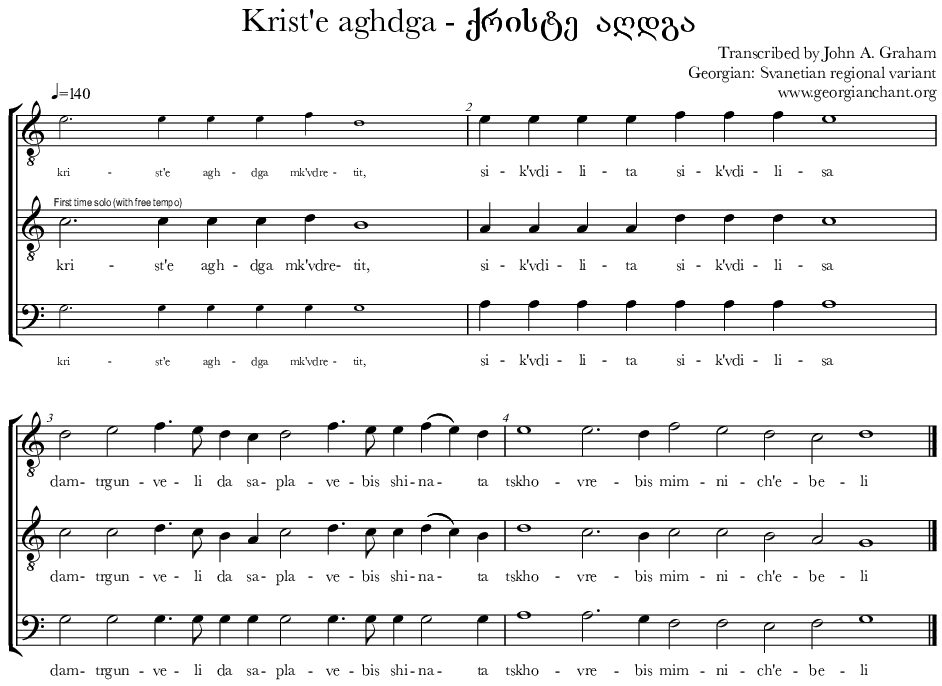
    With the end of the text-setting completed, the rest of the text setting easily falls into place. Here are a couple of points to consider:

    Textual Rhythm:

    In the second musical phrase, the text sikvdilita sikvdilisa is sung to a basic recitative, the music of which can be modified to fit the cadence of the English text, trampling down death by death. As an unaccented language, Georgian texts sung in recitative typically receive the same duration for each syllable. Thus this text in the Georgian original score receives only quarter notes for each syllable. But as an accented language, I find that it is appropriate to emphasize accented syllables in English using rhythm. Thus, the two instances of the word death receive quarter-note length treatment, while smaller words are set to quicker eighth notes in a manner that more approximates the rhythm of spoken English.

    Opening Declamation:

    The opening text on the “chanting note” is the all-important declamation “Christ is Risen!” In Georgia, this text is sung by a soloist signifying the entrance to the tomb at the beginning of the all-night Paschal vigil. Because this opening phrase defines the musical setting, it seems important to keep it as similar to the original as possible. In the middle ages, with longer or shorter texts, chanters simply added or reduced the number of syllables sung to the opening “chanting note.” But in this case, we want to keep the opening declamation intact, thus requiring us to set the remaining text across the subsequent musical phrases.

    Text-setting decisions:

    In measure 2 of the Georgian text, we have the four-syllable words sikvdilita sikvdilisa (death by death), which musically feels like a recitative whose music could be reduced or expanded. The English text trampling down precedes death by death, for a total of six syllables which, even though the words are out of order, almost matches the eight syllables in the Georgian phrase. The musical climax in measure 3 is given to the important verb damtrgunveli (trampling) in the Georgian, but the English word trampling has already occurred in measure 2. It is somewhat underwhelming to set this musically climactic moment to the relatively insignificant English words, and upon, which must follow if we are to observe proper word order.

    The closest word of significance would be those. So we place those on the climactic musical chord in measure 3, which helps us arrange measure 2. What is the best way to set the text and upon into the fabric of the preceding music without damaging any musical conventions of Georgian chant? I’ve chosen to add and up- to the recitative notes in measure 2, while –on leads us through tension building chords at the beginning of measure 3 to the musical climax.

    Teaching the chant:

    When teaching kriste aghdga to international singers, I try to impress upon them the importance of singing this particular variant in a performance practice that is appropriate the region of its origin (Svaneti), which is also what lowland Georgian singers emulate when they sing this highland variant. Characteristics of Svanetian performance practice can be observed in the many recordings of folk music that abound on the internet today, or in live performances in Georgia.

    For example, they sing open-throated, loudly and boldly, with ringing overtones especially in the close-harmony dissonant chords which characterize Svanetian harmony (chords including 5-4-1 interval distribution, such as D-C-G, as on the word tombs in most variants). They don’t mind a few glissandos. The traditional tuning tends sharp, as the extremely bright sound pushes the outer limits of the open-fifth chords between the outer voices, while the middle voice tends to sing closer than a whole tone to the top voice when singing the 5-4-1 chords. Thus through repetition, the entire chant intentionally drifts sharp.

    Voice Distribution:

    The chant begins, by unusual convention among Georgian liturgical chants, with a soloist singing the opening declamation. On subsequent repeats, the entire choir sings the first phrase “Christ is Risen from the dead” (see small note heads in the outer voice parts, measure 1).

    The upper voice parts are most often sung by soloists, while the rest of the singers support with the lowest voice part. As the text is repeated many times throughout the Paschal service, different singers often take turns singing the upper voice parts. If there is a large choir, a director may choose to ask more singers to join the upper voice parts, but the lowest voice should always have more singers than the upper voice parts to provide the correct balance.

    Most Georgian choirs would choose to sing this chant with either a section of men (tenor-tenor-bass), or women (soprano-soprano-alto). This way the natural timbre shines through. In no cases should the octave be doubled by low basses. The performance pitch of the chant should be chosen based on the personnel, it can be sung at any register high or low.

    The first, second, and third endings present only some of the possible ornamental cadential variations that might be encountered among Georgian traditional singers.


    We welcome your questions and comments!


  • 10 Magnificent Churches of Kartli

    10 Magnificent Churches of Kartli


    In this series of posts, I document an extraordinary trip to 10 churches in the Shida Kartli region. In this specific post, I share photos from that trip. For more detailed descriptions, see my post on Rkoni Monastery, or the incredible medieval “Tamar” bridge near to Rkoni.

    This trip is accessible by jeep tour only. To book your tour, contact us directly!


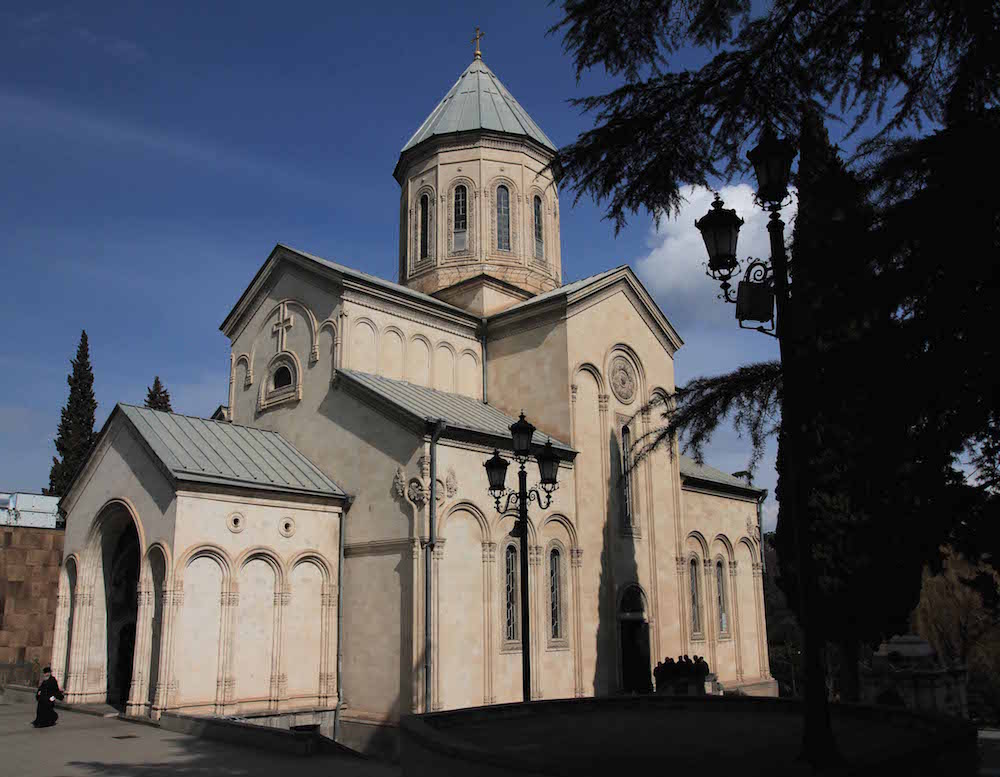
    The Kvatakhevi Monastery (12th c.), Kartli


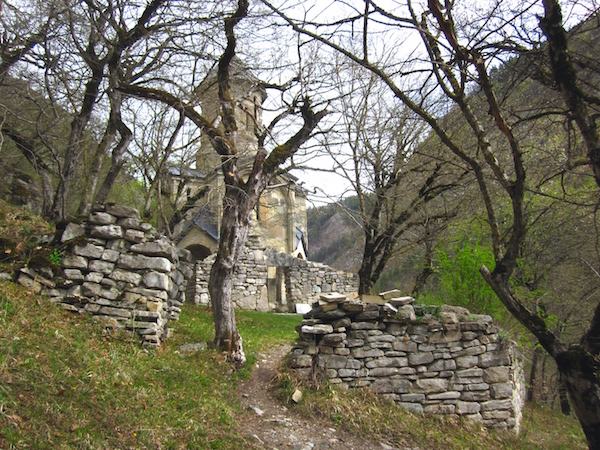
    The Kvatakhevi Monastery is at the top of a box canyon in the northern hills of the Trialeti mountain range. The dirt track leading to this historical site comes from the Mtskheta-Kaspi road along the Mtkvari river, near the village of Kavtiskhevi.

    The Monastery dates to the 12th century, and was an important center of Christian worship throughout the middle ages. Several existing manuscripts are known to have been copied in the scriptorium there.

    In the 19th century, much of the monasteries treasure was ‘borrowed’ and is now part of the Moscow State Historical Museum collection, a fate of many important historical artifacts in Georgia.

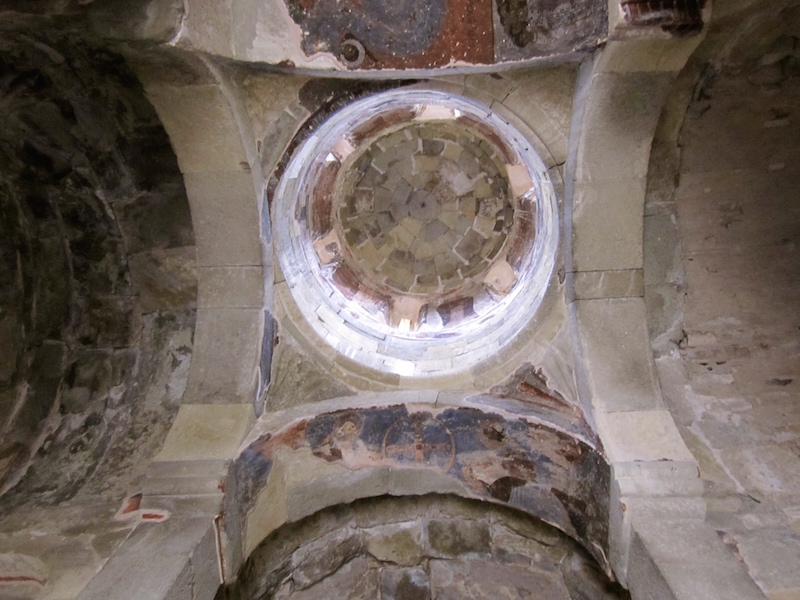
    Kvatakhevi is connected with the history of liturgical chant in the figure of Archimandrite Tarasi Aleksi-Meskhishvili, a 19th century abbot of the monastery. He was responsible for rebuilding the monastery, especially rebuilding the damaged dome and putting on a new roof. He was an expert chanter, and helped train Grigol Karbelashvili to chant in the mid-19th century. Grigol’s five sons would be the last generation of expert chanters in East Georgia.

    More photos of Kvatakhevi Monastery:

    The Ertatsminda Cathedral (12th c.), Kartli


    Ertatsminda Cathedral, Kartli churches


    The Ertatsminda (One is Holy) Cathedral is located in the center of a small village with the same name.

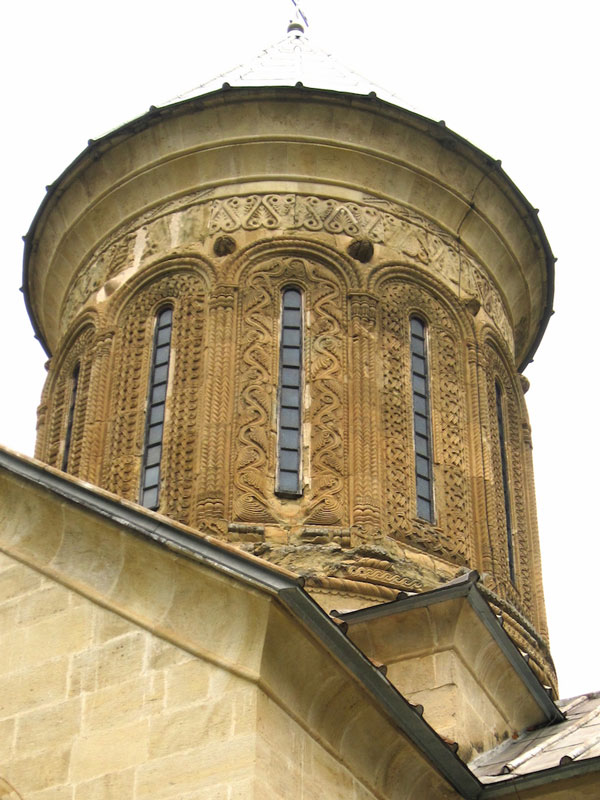
    The cathedral is gigantic, well built, and very impressive for such a small village. It’s architectural form, a dome on top of a cross-form plan, is typical of the great cathedrals built in the “Golden Era” of Georgian prosperity (12th-13th centuries). It’s smooth sandstone blocks, ornate carving, and bold exterior presentation are emblematic of the projection of power during that period. Similar exemplars of this architectural period include the nearby Kvatakhevi, Pitareti, Tsughrughasheni, Betania, and Ikorta monastery churches.

    The church has an unusual dedication: that of St. Evstati of Mtskheta, a martyr saint executed in 550 AD by Persian Zoroastrian authorities. The story of this saint is told in a hagiographic narration written shortly after his death, representing some of earliest layers of Christian hagiography. Scholar Stephen Rapp and others have written about this important work.


    The Chachubeti Church (10th c.), Kartli

    Chachubeti church in Kartli, Georgia

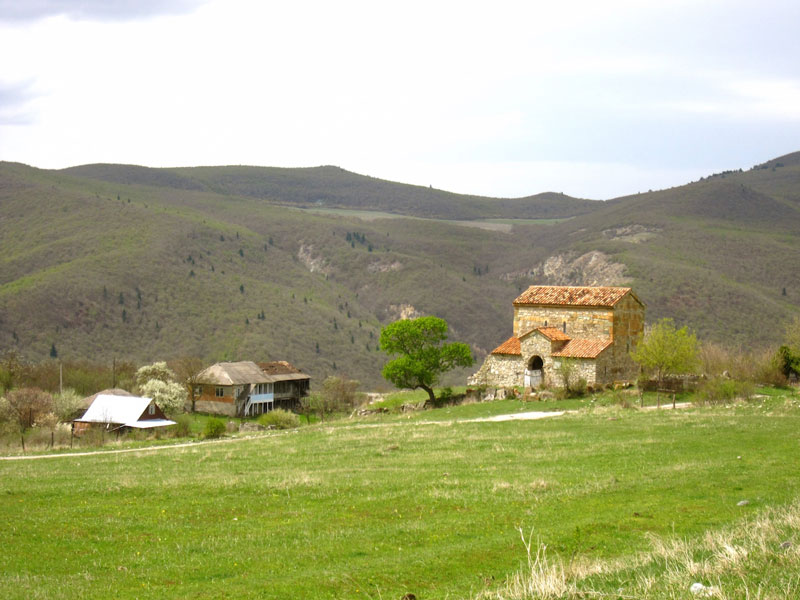
    The Chachubeti church of the Mother of God is located on a bluff above the hamlet of Chachubeti (pop. 26 in 2002, maybe less now). The town is 29 kilometers from Kaspi, on the road to Rkoni.

    The church dates to the 10th century, though it was renovated in the 13th-14th centuries, according to the sign posted outside. The basilica measures 35×25 feet, and has three entrances. There are only a few fresco fragments remaining.

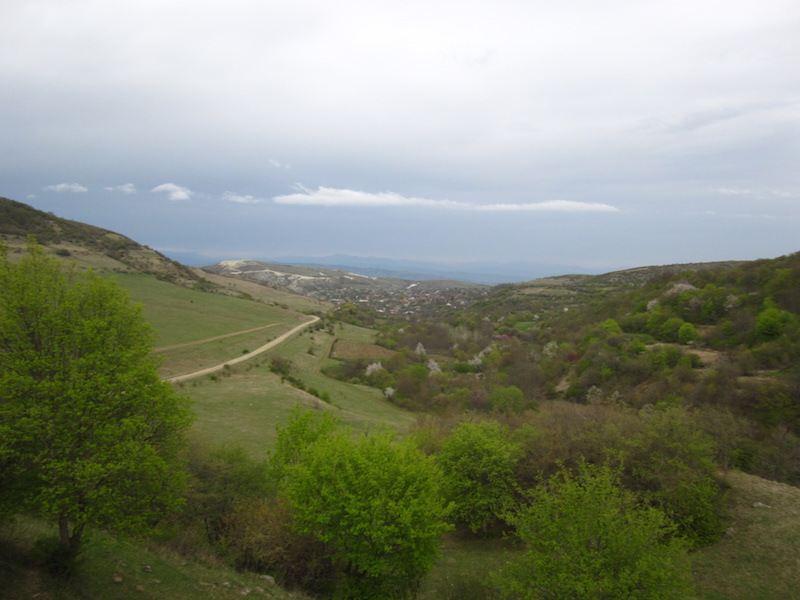
    The view from this church is stunning, if you have a chance to stop and take a look around.


    The Maghalaant Church (12th c.), Kartli


    Maghalaant Church, Kartli churches


    The Maghalaant basilica dates from the 12th-13th centuries, a period of general prosperity and construction in East Georgia.

    In the 15th century, the Maghaladze clan from Imereti were given the lands near the entrance to the Kvatakhevi gorge. They fortified the church with exterior walls and a guardhouse, giving the church its current name. The family grew in importance in the late 17th century, and were awarded tavadi (duke) status in 1701 by King Erekle I of Kakheti.

    The bell-tower and defensive walls were further fortified in 1716 by one, Solomon Maghaladze, according to a placard, but have since fallen into near ruin.

    Inside the church, incredibly detailed and creative frescoes are in very good condition, but are in severe need of cleaning and restoration work.

    More photos of the Maghalaant Church:

    The Ikvi Church (11th c.), Kartli


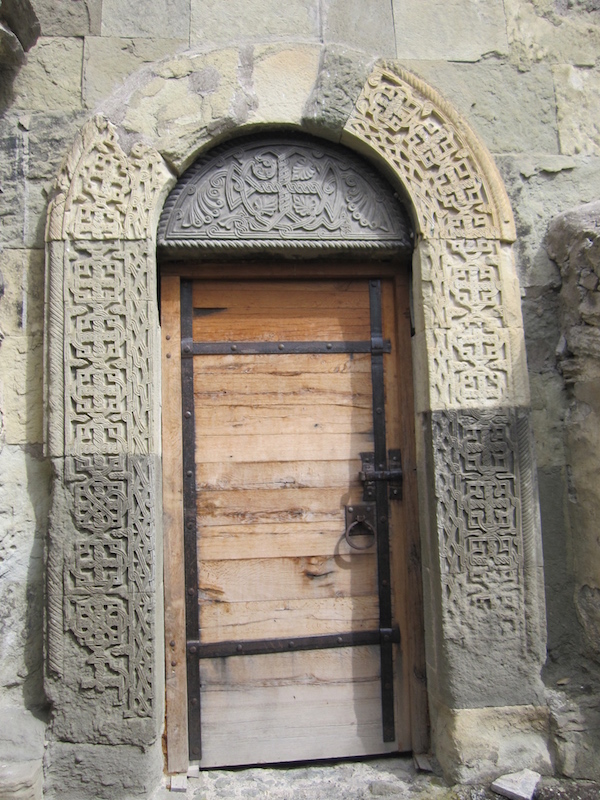
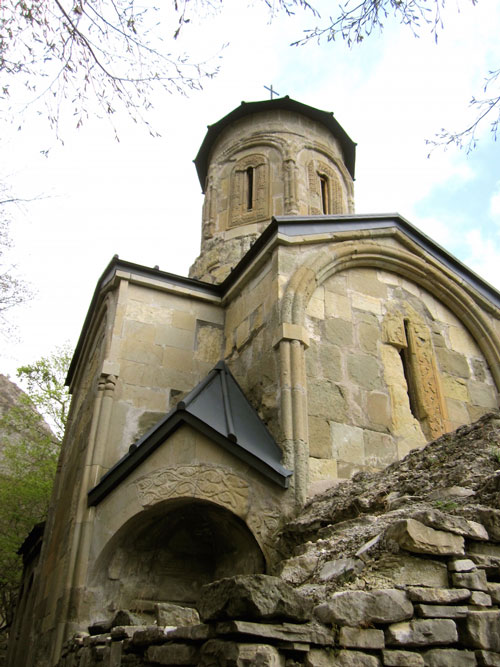
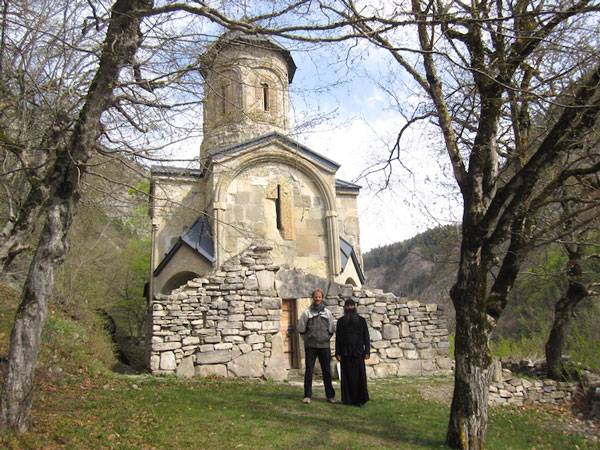
    The Ikvi church is one of the most picturesque small chapels in all of Georgia. It’s elegant dome, set on a tiny floorplan, sits alone in a forested gorge. In the past, the village of Ikvi existed somewhere nearby, but today there isn’t a trace of it left.

    It is also somewhat mysterious. No legends survive, no stories of attack, martyrdom, or divine healing surround this church. It’s almost as if the oral history of the church has been forgotten.

    At the beginning of the 20th century, the church was in bad disrepair. Records show that in 193901940 some restoration work on the walls was completed. More recently, a thorough restoration project has just completed. I was extremely impressed to see the quality of renovation (a rarity in construction projects in Georgia): new roofs, holes patched, a new door, and all done with taste and care. Furthermore, all trash and construction materials had been removed. Not a single sign exists to document the work either. One either notices it, or not!

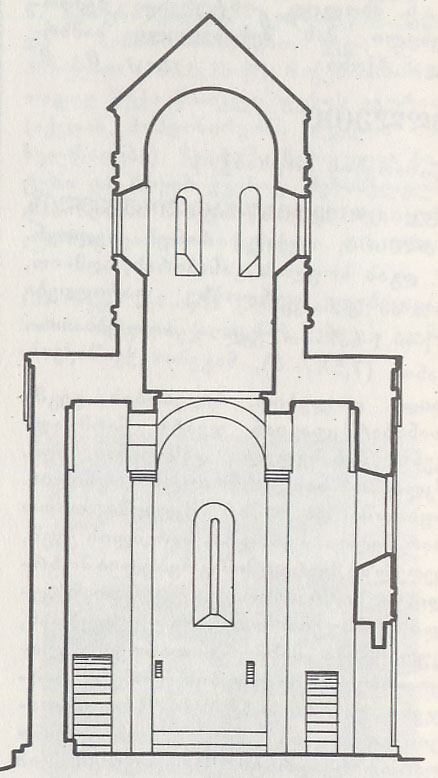
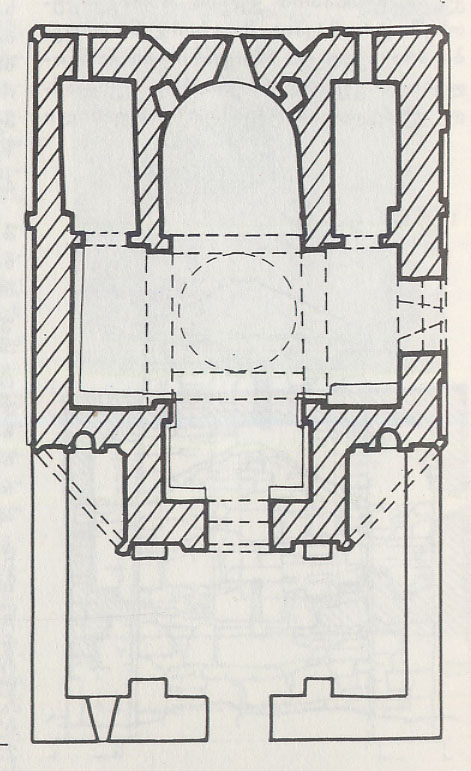
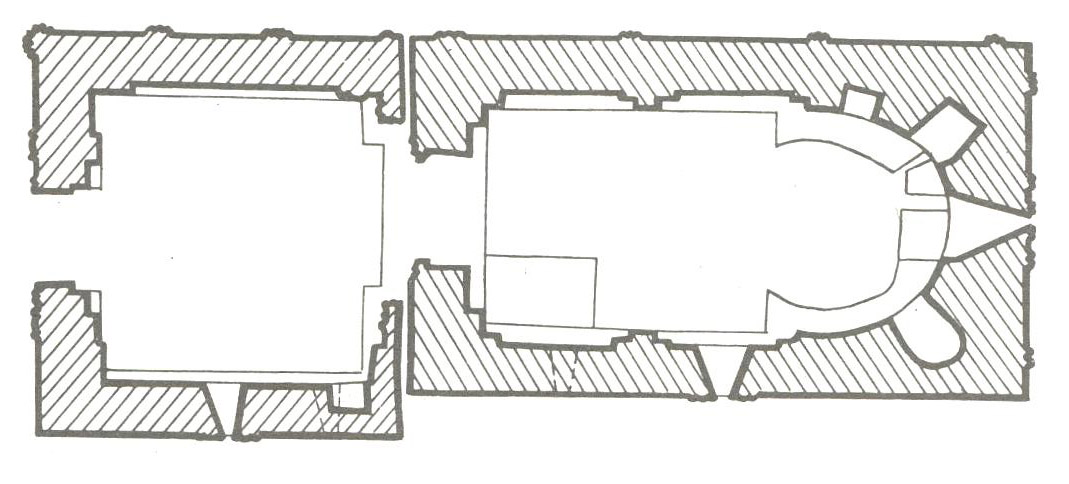
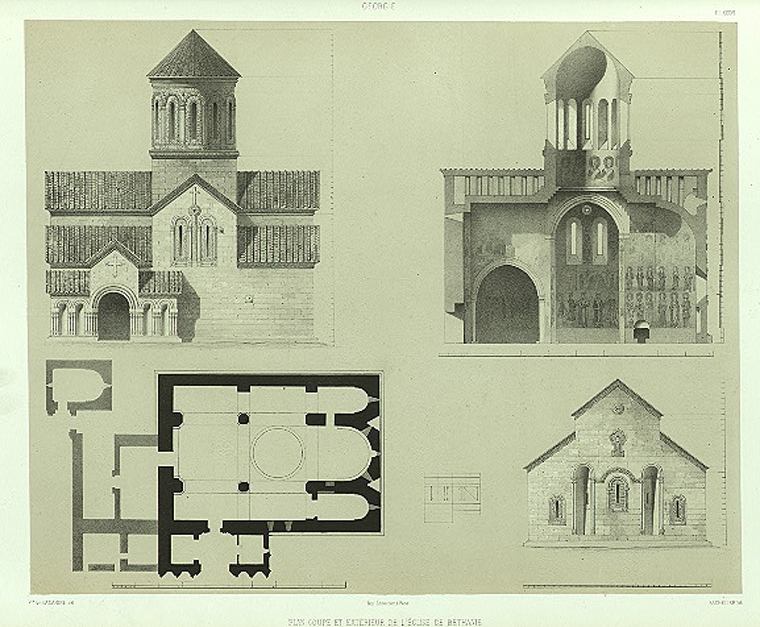
    Plans of the Ikvi Church:

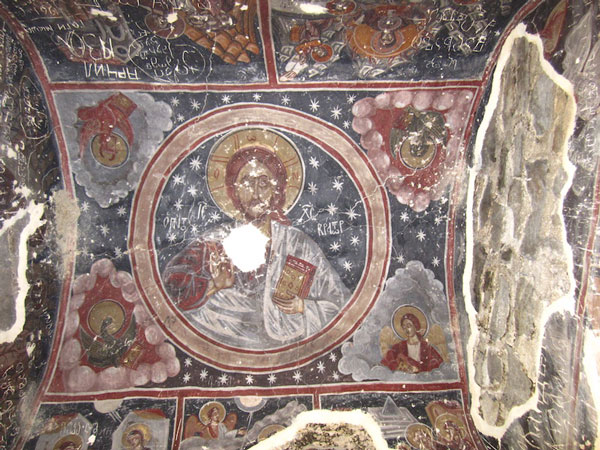
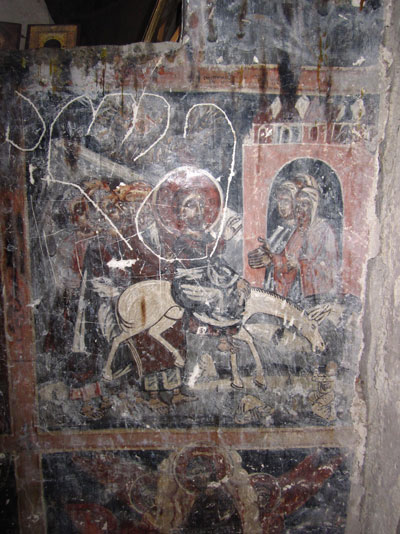
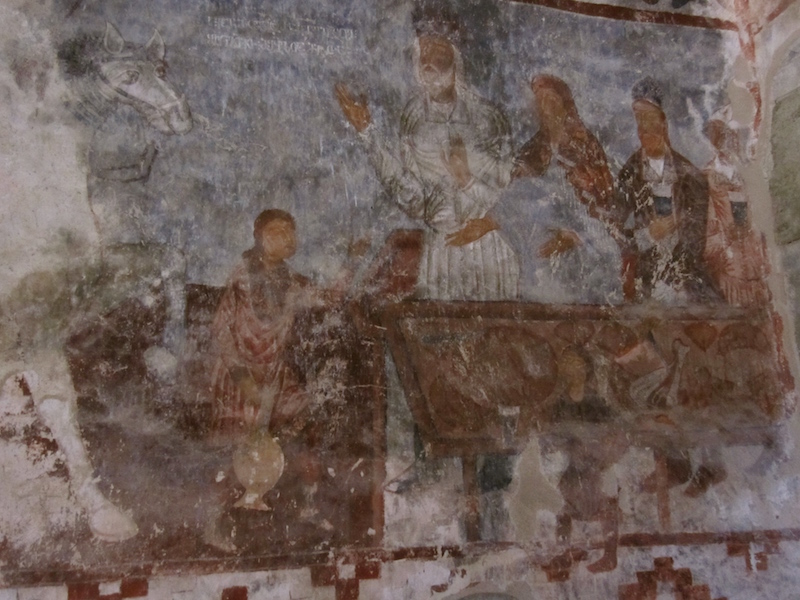
    But the church couldn’t have been that bad off, because an incredible number of frescoes survive! These look original to the 11th-12th century building, and are remarkably intact. For fresco aficionados, Ikvi church is a “must-visit.” I couldn’t believe the composition and detail. Moreover, despite the plan of the church being tiny (only 30×25 feet), it displays only the highest quality masonry, exterior ornamentation, architectural proportion, and interior wall painting.

    More photos of the Ikvi Church:

    The Rkoni Monastery Complex (7th-18th c.), Kartli

    The 7th basilica dedicated to the Dormition of the Theotokos, Rkoni Monastery, Kartli

    For the full description with videos and photos of the monastery complex, see our post on jeep tours to Rkoni Monastery.


    The medieval “Tamar bridge” near Rkoni (12th c.), Kartli

    Tamar bridge, Rkoni region, Georgia

    A separate post describes how to find the medieval “Tamar bridge” near the Rkoni monastery. The bridge is also one of the architectural wonders of Georgia, and shouldn’t be missed!


    The St. Simeon Stylite tower church (12th-13th c.), Kartli


    St. Simeon Stylite Tower Church, near Rkoni Monastery


    See our post for the full description with videos and photos of the St. Simeon Stylite tower church and frescoes.


  • Jeep Tour to Rkoni Monastery

    Jeep Tour to Rkoni Monastery


    In this series of posts, I document an extraordinary trip to 10 churches in the Shida Kartli region. To see the full post on the Churches of Kartli, click here. In this specific post, I share photos and video of the incredible 7th century Rkoni Monastery, and the tower dedicated to St. Simeon Stylite on the ridge above the monastery.

    This trip is accessible by jeep tour only. To book your tour, contact us directly!

    The Rkoni Fortress

    To reach the monastery complex, one has to pass the imposing Rkoni fortress, once the summer home of Queen Tamar, and according to legend, the site of much treasure hoarding over the centuries.

    Rkoni Fortress

    The fortress is situated at the confluence of two branches of the Tedzami river deep in a gorge sloping down the northern flank of the Trialeti mountain range in central Georgia. To find it, we drove one hour West of Tbilisi to the nearest big town of Kaspi, then south up into the hills for another hour.

    Because there is no jeep access to the Rkoni monastery and medieval “Tamar bridge,” visitors park at the last village and walk under the Rkoni Fortress up river along a 2 kilometer foot path.

    A 17-second glimpse of the magical Rkoni forests in early spring!

    [kad_youtube url=”https://www.youtube.com/embed/LB2Jaio2mRo?rel=0?ecver=2″ maxwidth=”600″]


    But in the medieval period, the road clearly did not stop here. It continued up the gorge, past the impressive Rkoni Fortress ruin, and into the mountains.

    From the top of the gorge, travelers would have found themselves in the heart of the Trialeti mountain range, from where they could access roads to the Ateni gorge, the Dzamis gorge, or to climb to the highlands of Bakuriani and Tsalka. These routes connected the Mtkvari river valley with the entire southern kingdom of Samtskhe-Javakheti, an alternative to the treacherous and dangerous track along the Mtkvari river through the Borjomi Gorge to the West.

    Medieval "Tamar bridge" at Rkoni Monastery, Kartli

    A series of extremely well built arching stone bridges were strategically constructed up the gorge in order to allow for horse and cart traffic (take a look at my parallel post about “Tamar” bridges to see video of the stunning Rkoni medieval bridge).


    Approaching and entering the 7th century basilica of Rkoni!

    [kad_youtube url=”https://www.youtube.com/embed/t_FrvHqXQ6A?rel=0″ maxwidth=”600″]

    Inside the Dormition of the Theotokos basilica, Rkoni Monastery

    The Rkoni Monastery complex has many different buildings, some in half ruin. The basilica dedicated to the Virgin dates from the 7th century, and is in need of interior restoration (last received official preservation work in 1972).

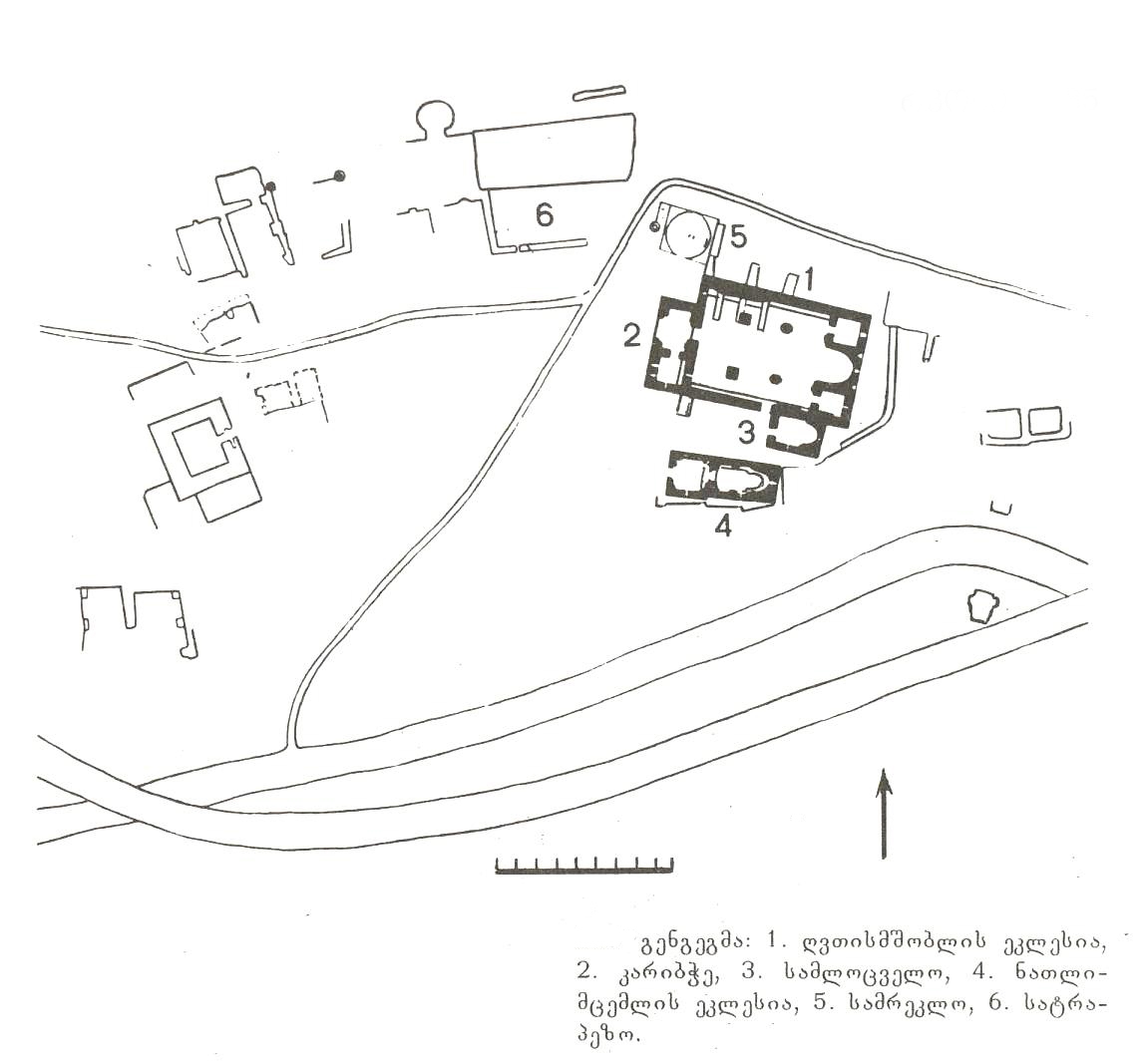
    Other buildings in the complex, such as the church of St. John the Baptist and the bell tower, date to a later period of construction (13th-14th century). Still other buildings are ruins from as late as the 18th century, the sheer number of such ruins suggesting that a large community of monks lived here (see plan to the right).

    The basilica is normally locked to visitors because there are fears that the frescoes could be damaged, or worse, that someone could be injured by falling ceiling pieces. Also, the monastery is very remote, and does not typically have anyone there to attend to the actions of visitors.

    According to my friend and guide, monk Zakari, in the summer months, monks from the Kvatakhevi Monastery walk to Rkoni on Fridays (a 5 hour hike), stay overnight, and return on Saturdays. During their visit, they clean up trash, open the church, answer questions, discourage amorous behavior on the monastery grounds, and chase away any would-be graffiti artists. 🙂

    It’s not a perfect situation, but until there is more regular and systematic staff on site, it works.

    With monk Zakari as our leader, our small group was able to gain entrance to the monastery via a secret key. Inside, we were amazed with what we found.

    The church is basilica form, about the same size and floor plan as the Anchiskhati basilica in Tbilisi, or the Kvelatsminda basilica in Gurjaani. At least, that is what I was reminded of.

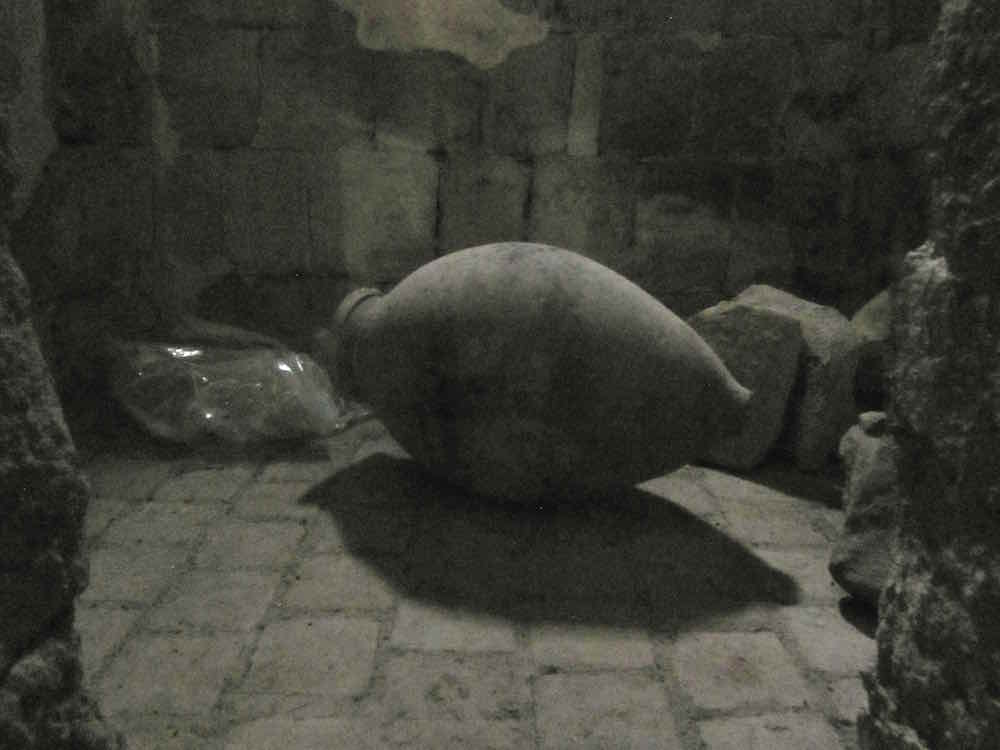
    The space is clean, except for a few materials that look like they’re waiting for the preservation experts: boards for scaffolding, a few ropes, etc. In one side chapel, there is an intact qvevri – the clay vessel used for storing wine. The floor is tiled with Georgian square clay tiles.

    The uphill side of the Rkoni Monastery complex
    [kad_youtube url=”https://www.youtube.com/embed/pwIODEajK2w?rel=0″ maxwidth=”600″]


    There are frescoes in the two side chapels, dating probably from the 12th-13th century period, though I couldn’t be sure. There are also intact frescoes on the West wall, but the sunlight coming through the single window in the West wall made it impossible for us to see those photographs, or indeed, to photograph them.

    The exterior stone work suggests multiple reconstructions of the church. The ornamental stonework at the crest of the roof is characteristic only of churches from the 6th-8th centuries.


    Viewing the Simeon Stylite tower at Rkoni!

    [kad_youtube url=”https://www.youtube.com/embed/tnB495My1XM?rel=0″ maxwidth=”600″]


    13th c. Church of St. Simeon the Stylite, near the Rkoni Monastery

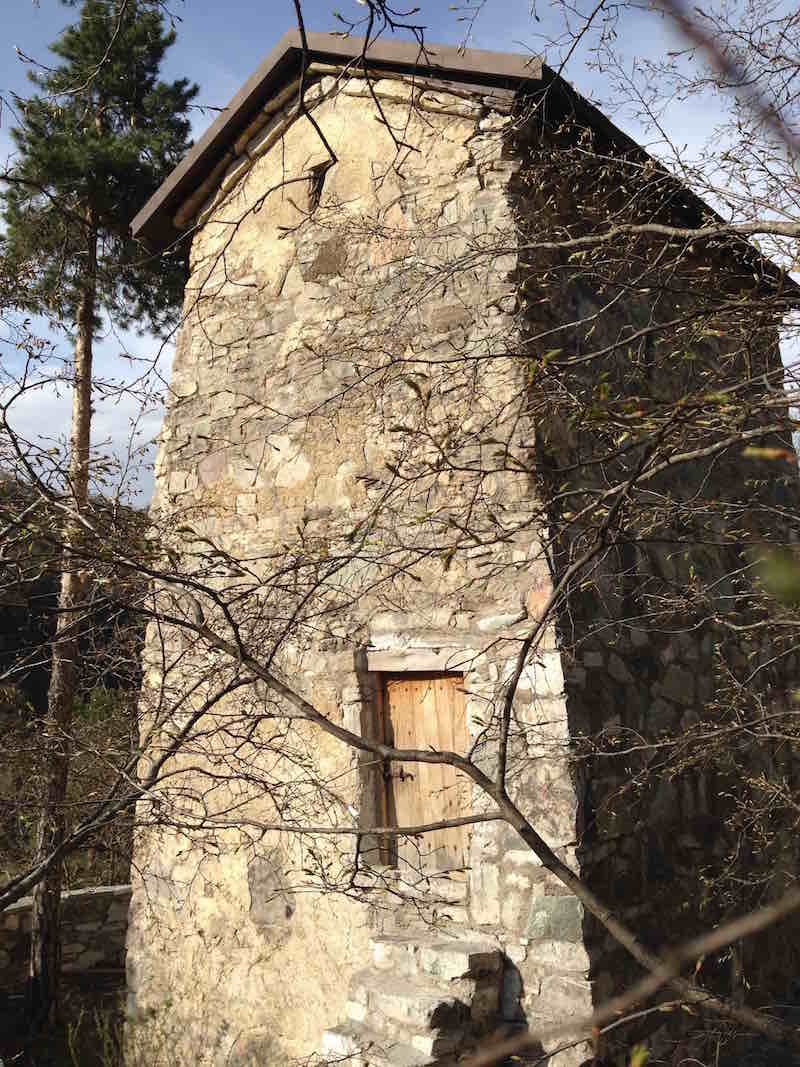
    After crossing the “Tamar” bridge at Rkoni, we scrambled up a steep hillside to a medieval tower, built into the hillside far above the monastery. The three-story tower is surrounded by forest.

    A recently patched up wall around a narrow yard displays evidence of recent attention. Indeed, older photos on the internet reveal that the roof and first floor used to have gaping holes. Now, gratefully, the tower church has a new roof and patched up exterior walls. No one is complaining that the old wooden door to the yard, which gives so much character to the place, still hangs by one hinge in a permanently half open position (see video).

    Inside the tower, we climbed steps to the top level where we found original frescoes on the walls, dating back to the 13th-14th century period. Through narrow slit windows, spectacular views up and down the valley suggest that the tower church doubled as a sentry post.

    On the river side, the views are spectacular: straight below and across the river, a plan view of the Rkoni Monastery spread out before us with each rooftop clearly defined against the green meadow around the monastery.

    Down valley, the sun glinted off of the white limestone of the imposing ruin of the Rkoni Fortress, and up valley, the view commands several switchbacks of the tumultuous Tedzami River as it winds upwards into the forested upper canyon. Turks, even Tamerlane, are said to have come from the plateaus above, while enemies might easily come up from from the broad valleys of the Mtkvari river as well.


    Returning home at Dusk

    As we returned to our car at dusk, we snapped this photo with the last full-time inhabitant of the local Rkoni village. Maybe in the future, more people will return to live in this village. There is talk of a paved road, increased economic activity from tourism, and renewed interest from local people. Indeed, a new hotel is being built in the village.


  • Finding the medieval “Tamar bridge” near Rkoni Monastery

    Finding the medieval “Tamar bridge” near Rkoni Monastery

    In this series of posts, I document an extraordinary trip to 10 churches in the Shida Kartli region. To see the full post on the Churches of Kartli, click here. In this specific post, I share photos and video of the incredible medieval stone bridge, a so-called “Tamar bridge”, named for the famous 12th century monarch of Georgia under whose reign these bridges were presumably built.

    This trip is accessible by jeep tour only. To book your tour, contact us directly!


    Our Trip

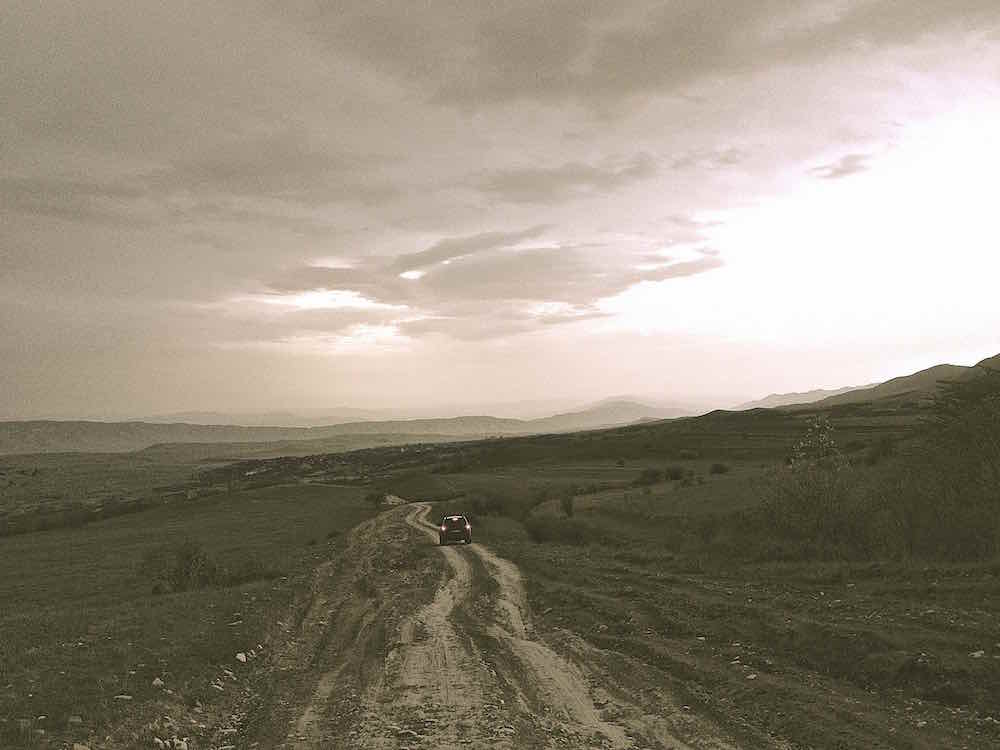
    After driving several hours over winding dirt tracks through the hills above Kaspi and Ertatsminda, we left the car at the small village of Rkoni. From here, passable roads stop. Visitors carry on by foot.

    But in the distant past, the road continued. A series of extremely well built bridges were strategically constructed up the gorge in order to allow for horse and cart traffic to travel between the plains of the Mtkvari river valley and the highland plateaus and summer grazing lands to the south. These date from the late 12th century during the reign of Queen Tamar (1160-1213)!

    My friend Fr. Zakari was kind enough to be my guide on this trip. He was born and raised in Kaspi, and spent his childhood summers in Rkoni village with his extended family. He and his brother, who also joined our excursion, spent their childhood years exploring the forests, monasteries, and fortresses all around this region. Fr. Zakari also asked permission of the bishop to get into the locked 7th century basilica of the Virgin at Rkoni Monastery.

    If you don’t have a guide like I did, here is how to find the bridge! First find the Rkoni Monastery. From there, walk upriver about 200-300 meters on the only trail that goes that direction.

    Catching sight of the bridge is amazing. I invite you to watch this short video clip I shot while there.


    Medieval Tamar bridge over the Tedzami River near the Rkoni Monastery

    [kad_youtube url=”https://www.youtube.com/embed/SA-Hg2reb7Y?rel=0″ maxwidth=”600″]


    Arriving at this medieval “Tamar bridge”, for me, produced an amazing feeling. It was a feeling of surprise, joy, amazement, wonder, awe, and intense engineering curiosity all mixed together at once!

    Sketch of the Tamar bridge at RkoniThe location is so rural, so out of the way, the technology so simple yet graceful. One can’t help but marvel at the ingenuity of the construction, and at the same time the improbability of its survival for the last 900 years.

    The high arching stone with no supports… it is as graceful as the European flying buttresses on Gothic cathedrals. But while those are in cities, on major buildings, here we are in the most backwoods rural forest one can find in Georgia, in what is today the virtual wilderness of the Trialeti Mountain range, looking at an architectural gem of a bridge.

    Rkoni medieval bridge in Georgia, seen on John Graham Tours.

    The bridge is constructed from local stone, embedded in a very thick and strong whitish mortar that must be some medieval cement combination that included lime and possibly egg (eggs were definitely used in mortars and plasters used for church construction.

    The bridge is most impressive when viewed from below. The best view point is across the river from the Rkoni Monastery, a few steps upriver. From there, this is the view:

    After playing around at the bridge, maybe having a picnic in the broad meadow on the other side, I recommend the 15 minute scramble up the hill to the tower church of St. Simeon Stylite!


    Aerial footage of Tamar bridge at Rkoni and surrounding sites

    [kad_youtube url=”https://www.youtube.com/embed/t_TqTi6uteQ?rel=0″ maxwidth=”600″]


    Enjoy this professional produced video, featuring aerial views of the Tedzami river, Rkoni monastery, and local Drisi castle. The soundtrack is not bad either!

    For those interested in hiking possibilities, there are now marked trails through the Trialeti Mountain range. Two of these trails converge at the Rkoni village. Do internet searches for trails on the Rkoni-Kldekari track that goes into the Algeti National Forest. Access from the south is from Rkoni. Access from the north is from Manglisi.


  • Folk Music Concert: Tbilisi Conservatory Centennial

    Folk Music Concert: Tbilisi Conservatory Centennial

    On Tuesday, May 2nd, a folk concert was held in the Grand Hall of the Tbilisi Conservatory as part of the concert festival celebrating the 100th year anniversary of the Conservatory.

    Several excellent groups performed. I wasn’t able to film all of them (notably my camera died before being able to capture the Telavi folk and chant ensemble “Patara Kakhi“), but I was able to capture snippets of some of the performances. Other performers included longtime friends from the Sakhioba Ensemble and Didgori Ensemble. Check out their latest albums on their websites!

    Enjoy the below clips of lesser known but equally interesting groups!


    Dziriani Choir: folk dance song


    Dziriani Choir: “Kristes perkhuli” – a Rachan Easter-season round dance para-liturgical song


    Adilei Choir singing “Chven Mshvidoba” – Imeretian variant


    Adilei Choir singing “Jikura” – an Acharian worksong


    Conservatory Choir – Tushetian song


    Conservatory Choir – Tushetian dance song


    Conservatory Choir – Iavnana (praise song)


  • Flash Mob Tbilisi (Georgian Folk Singing)!!

    Flash Mob Tbilisi (Georgian Folk Singing)!!

    This past Thursday, a group of some 80 singers participated in a “Flash Mob” of folk singers. From amongst the crowds at the Tbilisi Tourism Fair at the ExpoCenter-Georgia complex building #11, the singers emerged in various groups singing upbeat music. Dancers and instrumentalists also joined in the fun. Take a look!


    Flash Mob of Georgian Folk Music and Dancing (my video)


    Later, the pros edited together lots of our videos to create this promo video for a new app called Travel Guide — an ‘in your packet’ aid to exploring Georgia’s city sites (the free and useful app can be downloaded here). Take a look at the finished product!


    Flash Mob of Georgian Folk Music and Dancing (professional video)


  • Easter chants at Kintsvisi Monastery

    Easter chants at Kintsvisi Monastery

    Easter at Qintsvisi MonasteryAfter singing the Paschal all-night vigil at Bana Monastery, and trapeza in the morning, I started back towards Tbilisi with four monks as passengers (going to visit their families). Along the way, we stopped at the Kintsvisi Monastery to see its famous frescoes. There, we were happy to sing Easter chants to celebrate aghdgoma (the Resurrection) in the wonderful acoustics of the main domed church of St. Nicholas.

    Easter at Qintsvisi Monastery-2For an Easter day in April, the weather was glorious. All of the monks were in a celebratory mood, despite our collective sleeplessness. When we arrived at Kintsvisi, the resident monks there emerged to respectfully acknowledge our group… many of them were older monks so I was reminded again of the youth of the brotherhood at Bana Monastery: most monks there are in their 20s or early 30s.


    Video: “Easter chants” at the Kintsvisi Monastery, April 17th, 2017


    Frescoes in the Church of St. Nicholas (1205 AD)

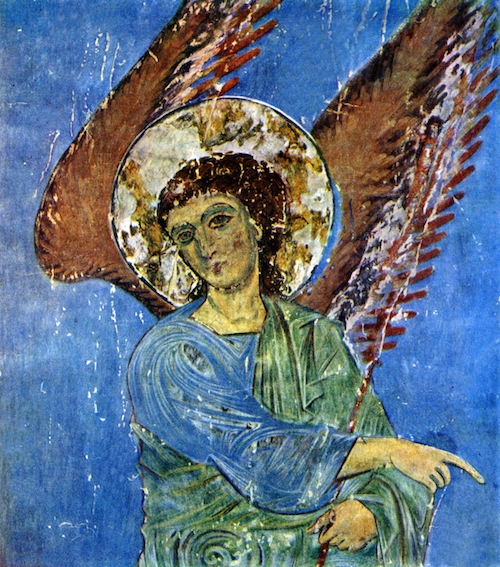
    Inside the Church of St. Nicholas at Kintsvisi – dated to the early 13th century – there are a set of impressive frescoes that attract specialists from around the world. The most famous of these is the depiction of Archangel Gabriel in the North apse, considered to be a masterpiece of fresco painting from the period.

    The incredible blue colors are still bright. Copies of this fresco abound everywhere in dedicated icons, stone carvings, brochures, and trinkets.

    Easter at Kintsvisi Monastery 4

    Easter at Kintsvisi Monastery 3

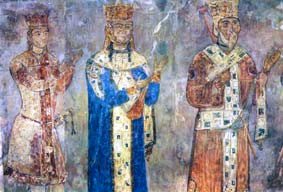
    Also of note is a fresco of Queen Tamar (one of the four remaining including the one at Betania Monastery).


    Church of the Virgin (10th c.)

    The oldest of the four churches at Kintsvisi is actually a 10th century church dedicated to the Virgin Mother. Built of impressively large rough-hewn red blocks, the church was a large basilica type church that unfortunately has fallen into serious disrepair (it’s listed on the World Monuments Fund as a field project): the entire West end of the church has crumbled as the river below eroded the cliff and retaining wall that it was once sitting on. Inside, a beautiful fresco in the East apse remains intact!Easter at Kintsvisi 5


    Easter at Kintsvisi Monastery 6A new church at Kintsvisi

    A brand new church has also been built in the church yard, Lord knows why. The older churches need care, and money was spent on this. But then the local monks explained that the young abbot of Kintsvisi, only 32 years old, died tragically in 2006, and is buried in this chapel, so perhaps that was the reason for the new space.

    Easter at Kintsvisi Monastery 8

    Inside I found a very nationalistic map of an “ideal” Georgia, one that includes the regions of Abkhazia+, Samachablo, Lori, Klarjeti, Tao, and all of the high Caucasus regions. This may have been the extent of the Georgian kingdom under Queen Tamar in the late 12th century, but I don’t even know if it was that fully intact then.

    It’s worth noting that this type of nostalgic nationalism is not nearly as prevalent in Georgia as it is in Armenia, but it does come up every once in awhile. Still, to see it reflected in a map carved into stone on an iconostasis is a new and bold expression of this kind of nationalism, one that I have not seen before. 


    The Tower Monastery at Kintsvisi

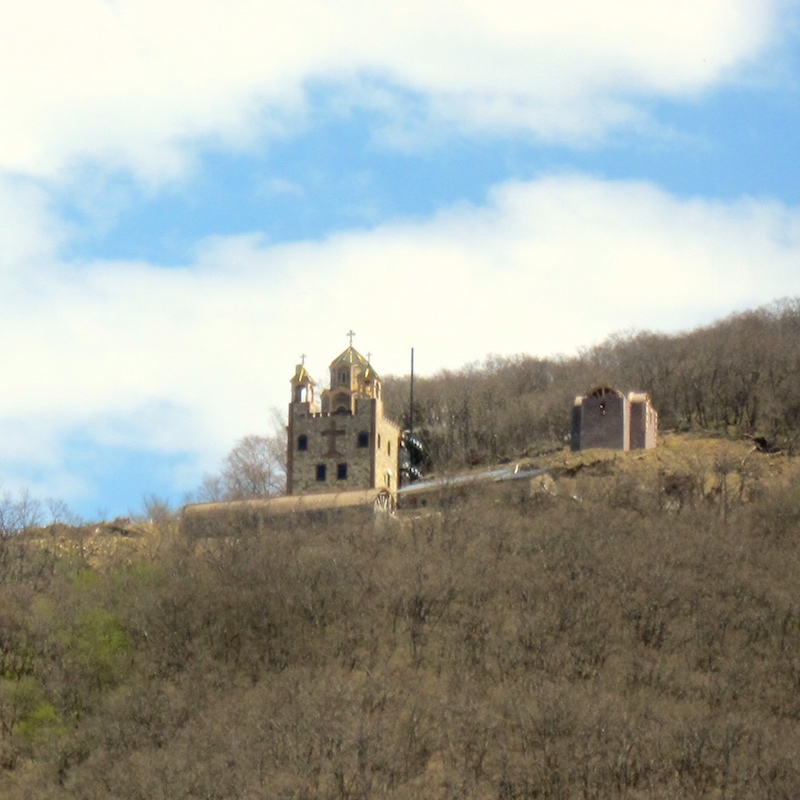
    For a final adventure, we decided to drive up a steep dirt road to a clearing about 500 meters above Kintsvisi. A new monastery is being built there which looks like a medieval Scottish fortress.

    Easter at Kintsvisi Monastery 10The entrance to the upper floors is by exterior metal staircase, and at the very top there is a small chapel with a cupola, all freshly painted with frescoes. We climb up. The roof is burnished gold, the view spectacular!

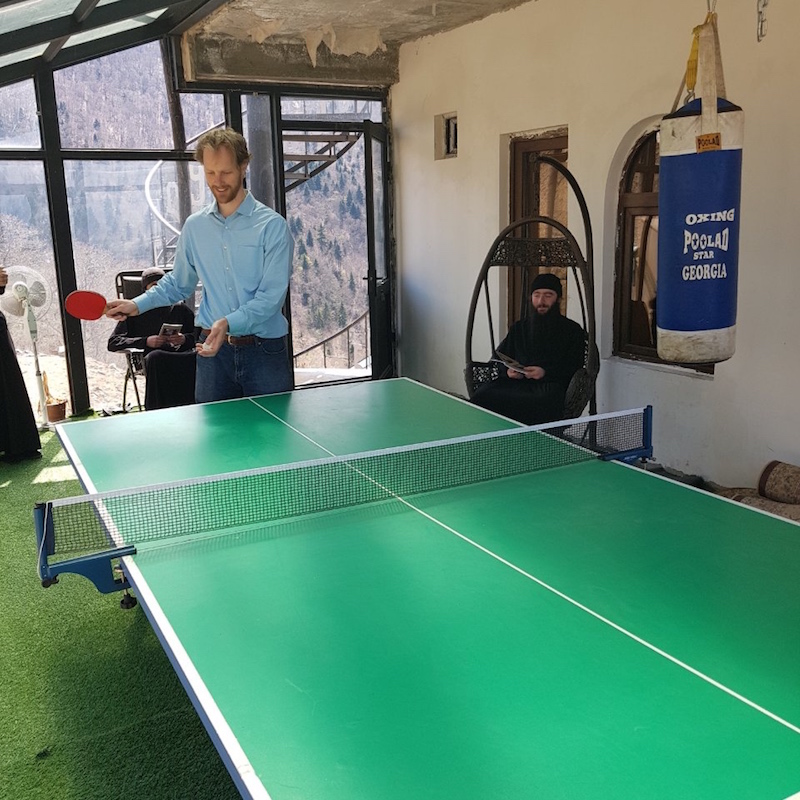
    Easter at Kintsvisi Monastery 11Downstairs, a pingpong table sits next to a professional-looking exercise center equipped with full-size boxing bag, weights, treadmill, and other items.

    Inside, the full man cave is revealed: fireplace, built in bar, beer “on tap,” a gigantic fish tank under a 48 inch television, a stuffed bobcat and weasel on dedicated shelves, and in the corner, a full set of Khevsuretian chain mail with daggers and swords to match.

    The priest decided I was a special guest and thus needed to be dressed up in the chain mail. 🙂 🙂


    Easter at Kintsvisi Monastery 13We didn’t meet the abbot of this particular outfit, but needless to say the whole operation was a bit amusing both to me and to my monk friends from the austere and unblemished natural environment of Bana Monastery (where the only electricity is solar, the only heating and cooking by wood). On the way back to Tbilisi, we joked about it all, and realized that stereotypes of ascetics were worthless anyway. As long as people are living with a healthy relationship to God, who are we to judge others?

    Easter at Kintsvisi Monastery 12

  • Easter All-Night Vigil, Bana Monastery

    Easter is here! I had the fortune to celebrate the feast with the small brotherhood of monks at the Bana Monastery. The monastery is located in the forests of Lower Kartli in a remote, nearly uninhabited valley. We started the service at midnight, in silence, under a moonless sky full of stars. Below are some video recordings of the service, posted in chronological order.


    Abbot Basili reading the Gospel, Easter night, Bana Monastery
    Abbot Basili

    Monks with black hoods emerged from their cabins along the woods and made their way to the small chapel in the field. The moonless night was bright with starlight; the air was cold enough to need jackets; the only sounds were our shifting feet in the grass outside as one figure after another entered the chapel.


    Around midnight, it was time to begin. After some prayers indoors, we all filed outside where Abbot Basili began the all-night Paschal vigil, reading from the Gospel in his lilting musical voice outside the East apse. We listened in silence, the flickering candles sometimes silhouetting the dark hoods of the monks, or revealing a cheek bone here, a strong nose there.


    Video: aghdgomasa shensa (Your Resurrection)

    Then we started the procession. Carrying icons, we processed slowly around the outside of the chapel, holding candles to light our way, and singing loudly aghdgomasa shensa (“Your Resurrection”).

    Aghdgomasa shensa kriste matskhovar

    angelozni ugaloben tsata shina

    da chventsa ghirs mkven kveqanasa zeda

    tsmindit gulita didebad shenda!


    Your Resurrection, O Christ our Savior,

    the Angels in heaven sing!

    Enable us who are on earth

    to Glorify You with a pure heart!

    Video: entering the church singing “Christ is Risen” Svanetian variant


    At the conclusion of the third circumnavigation, the abbot knocked on the “door of the tomb”, and we proceeded to sing the Paschal troparion kriste aghdga (Christ is Risen). Entering the church, we continued our singing, this time with the popular Svanetian variant. Many variants of the chant exist, as detailed in this exhaustive post on the chant kriste aghdga (includes discussion, performance video, and downloadable notation).


    Video: “Christ is Risen” multiple West Georgian variants


    Video: “Christ is Risen,” Patarava variant (West Georgia)


    The chapel is wooden, and like all of the log cabin sketes, was built in the early 1990s on an abandoned farm meadow high above the Dzamis river. The chapel is small, with a capacity for probably 40 people at maximum. Tonight, besides the 12 in the brotherhood, there were perhaps half a dozen visitors.


    Video: “Christ is Risen” Kartli variant (East Georgia)


    Video: “Christ is Risen” Karbelashvili variant (East Georgia)


    The service proceeded through the night. We sang all of the heirmoi for the Paschal canon (the video didn’t come out for those), we sang the liturgy. Time went by, and our eyelids grew heavy. 1am turned to 2am, and then 3am, and 4am. By now we had a second wind and everyone was chanting strongly.


    Video: “As Many as are Baptized”


    Video: “The Angels Cried,” and “The New Jerusalem”


    Around 4am, communion was offered, and shortly thereafter, at the conclusion of the service, we each retired to our cabins for some rest.

    After chanting for hours, the brain is over-oxygenated. I took a moment to stand in the light-filled meadow and soak in all of the sensations that I was suddenly hyper-aware of. The absence of man-made engine noises. The tiny sounds of a nocturnal forest. The glistening on the grass, and on the distant peak. The moon had come out, clearly illuminating the monastery meadow and making the trees along the mountain top across the valley shimmer silver and black… silver and black.

    The next morning, after our breaking-fast meal -trapeza- at 10am, we laughed and discussed pop culture and the world outside on a fallen log bench. At midday, I started back towards Tbilisi with four monks as passengers (going to visit their families). Along the way, we stopped at the Kintsvisi Monastery to see its famous frescoes and sing more chants.


    * * * * *   * * * * *   * * * * *

    The Bana Monastery is about 2.5 hours drive West of Tbilisi. One drives through the broad valleys of Kartli that bound the Mtkvari river until the town of Kareli, where the highway ends and a dirt road climbs into the Dzamis kheoba – a small river gorge that winds into the Trialeti mountain range to the south. There are 12 monks and novices that live there in relative seclusion; the valley is sparsely populated, with few visitors. But the community is anything but hermetic. The monks are young, full of energy, and constantly working on various projects such as chopping wood, collecting mushrooms, conducting services, researching… some of them are active on social media as well with photographs and updates on the life of the monastery.


    John A. Graham lives with his family in Tbilisi, where he leads custom-curated cultural tours throughout the Caucasus. He holds a PhD in historical musicology from Princeton University and regularly teaches and lectures on the history of Georgian traditional chant.


  • Kriste aghdga (Christ is Risen) – Georgian Easter chants

    Kriste aghdga (Christ is Risen) – Georgian Easter chants


    Kriste aghdga (Christ is Risen) is an important Easter hymn in the Georgian Orthodox tradition.

    It is sung when the priest knocks on the doors of the church, symbolizing entrance to the tomb of Christ, just before entering the sanctuary space to commence the all-night liturgy service.

    Then it is repeated in groups of three throughout the All-Night vigil service (4-7 hours). It is also sung in every service after Easter until Pentecost.

    The chant survives in many musical variants, as chanters in each village and region perfected their individual style. Take a look at the following video playlists to get a sense of the diversity of the music!

    I’ve written up a number of transcriptions and posted them here for download for performance purposes only! Please credit your source. 🙂


    Paschal Greetings and Vocabulary:

    Kriste aghdga!  Christ is Risen!
    Cheshmaritad aghdga! Indeed He is Risen!
    Dideba upals!  Glorify Him!
    Upalo shegvitsqalen Lord have mercy
    Aghdgoma Pascha


    Kriste aghdga Christ is Risen Gelati dome

    Notation:

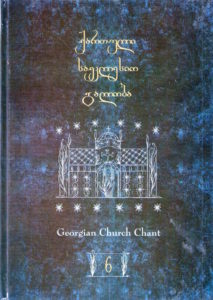
    This chant book includes six musical variants of the paschal troparion, kriste aghdga (Christ is Risen).


    Available on Amazon →


    Video: A playlist with 77+ Youtube recordings of kriste aghdga:


    Text in Georgian:


    Krist’e aghdga mk’vdretit

    sik’vdilita sik’vdilisa

    damtrgunveli da saplavebis shinata

    tskhovrebis mimnich’ebeli.


    Text in English:


    Christ is risen from the dead,

    trampling down death by death,

    and upon those in the tombs bestowing life.


    Pronunciation:

    If your international choir can get through the word mkvdretit, then you’ll be fine.  🙂 

    Just kidding, the hardest to pronounce for many American speakers is the problematic ‘r’. In all cases, this is a soft, flipped ‘r’ like in Spanish. Then there is a different sound in the throat (‘gh’), that sounds like the way French pronounce ‘r’, as in the city name, Paris.

    Here is a short guide to the most difficult consonants:

    gh       — soft French ‘r’ in back of throat

    mkv     – these are ‘pick-up’ consonants to the sung syllable: –dre. The ‘v’ consonant ends up being pronounced like ‘f’.

    dre       — like drain, but flip the ‘r’ very softly, almost inaudibly (no American ‘r’!!)

    trgu     – both the ‘t’ and the ‘r’ are produced by the tongue touching the back of the upper teeth, as in the Spanish flipped ‘r’ and adding the normal hard ‘g’ sound, and the ‘oo’ vowel. This should not be pronounced ‘ch’ as in ‘true.’

    ts       — as in cats

    kh     — also written as ‘x’ in phonetic alphabet, a gutteral sound that should not be over sung. If all else fails, skip it!


    Kriste aghdga (Svanetian variants)


    Video: 30+ performances of the popular variant from Svaneti

    Kriste aghdga (Svaneti variant)

    The most popular variant of the Paschal troparion in Georgia is quite possibly the variant from Svaneti – a highland region in northwest Georgia that preserves ancient layers of Kartvelian culture (archaic forms of language, folk music, agrarian tradition, Christian arts, etc.)

    As can be seen in the playlist of performances of this variant, it often begins with a solo sung by the middle voice. The top voice joins with the melody, while the bass harmonizes with typical Svanetian chord types (fifth and seventh intervals below the melody).

    Choirs often perform this chant with brusque, husky or burly sounding vocal affects, a nod towards Svan folk musical style. Performing this variant with this vocal style has somehow codified in popular imagination, such that even teenage girls (unnaturally and unnecessarily) try to mimic this style.


    Characteristics of Traditional Georgian chant:

    1) Traditional chant is almost always 3-voiced, not more not less.

    2) Traditional chant is sung in “close harmony”: the dissonances are integral to the desired sound. The tension-release in the music is symbolic of our prayers and supplications to God.

    3) Traditional chants end in unison. Many Georgian chanters will confide that like the Trinity, the three voices of Georgian chant come together as One, and that is the reason that most chants end in unison.

    4) Traditional chant is organized around fixed model melody fragments that are sung in the top voice. To lose the model melody is to lose the chant, as the harmony is based on the melody.

    5) Traditional chant follows strict conventions of harmonization. The lower voices harmonize the model melodies according to local aesthetic taste, developed and vetted through centuries of oral tradition.

    6) Traditional chant likewise follows strict conventions of ornamentation. By expanding the ornamentation with “foreign” flourishes, it loses the local character developed and vetted through centuries of oral tradition.

    7) Traditional chant performance was a privilege, a guild. Master chanters trained for 5-6 years to attain proficiency in hundreds of model melodies, harmonization and ornamentation techniques, and the complex rubrics of the Orthodox rite. Thus, it is possible to imagine that upstart composers with a couple of years of Conservatory training, no matter how talented, were not immediately accepted members of the chanter’s “guild.”


    Performance Tips:

    There are a number of ways to perform this chant.

    Georgian choirs tend to change their performance technique based on the variant. For example, the Svaneti variant is often sung in a very strong brusque voice, perhaps trying to emulate Svanetian folk singing. The Erkomaishvili and Patarava variants from the Guria region (Shemokmedi monastery style) are often sung by trios similar to the folksong trio genre popularized by these very singers in the early 20th century.

    As a choir director, one has to make choices between trying to preserve some “authentic” performance practice, and being realistic about the capabilities of one’s choir members. Calling something “authentic” is of course problematic because there was so much variation even within the known traditional-singing community in the early 20th century. That disclaimer aside, here are some suggestions.


    Sounding Georgian:

    • – One singer on the top voice
    • – One singer on the middle voice
    • – Optional number of singers on the lowest voice (good vocal balance typically demands 3-5 singers)
    • – develop individual voices to have an narrow, cutting, bright timbre
    • – develop a bass choral sound that supports the laser focus of the upper voices
    • – the “sacred” feel of the sound is in the mental and physical approach to the texts, not in any acquired vocal affect
    • – men, women, or children can sing, but it must be “close” harmony. Doubling at the octave is an imported musical feature.
    • – timbre should be natural (tenors and sopranos in their mid-range, altos and basses in their mid-range). This is why most Georgian choirs, given the choice, elect to sing TTB, or SSA, rather than mixed gender choirs.


    Kriste aghdga (West Georgian variants)


    Video: performances of the Dimitri Patarava variant

    Kriste aghdga (Patarava variant)

    Dimitri Patarava (1886-1954) was one of the last “grand-masters” of Georgian chant, an inheritor of the unique oral tradition of liturgical chant passed down for generations at the Shemokmedi Monastery in West Georgia.

    His variant of kriste aghdga was transcribed into European notation by his son Mamia Patarava sometime in the 1950s. It is similar to other variants from the Shemokmedi Monastery, but offers a unique take on how to harmonize the familiar melody. Note the first medial cadence on a seventh chord! This unusual cadence chord reveals itself as a brilliant segue to the second phrase, which launches with a 1-5-9 chord on the text sikvdilita….

    At the third repeat of the chant, Patarava performs the words tskhovrebis mimnichebeli as an extended coda-like improvisation. The up-tempo interplay of the upper voices (two voice crossings!), combined with the simple but solid counterpart in the bass voice demonstrates the creativity and musical genius of the master chanters: they took a simple melody and molded it into extraordinary three-voiced improvisational polyphony.


    Video: performances of the Erkomaishvili variant – West Georgia

    Kriste aghdga (Erkomaishvili variant)

    Artem Erkomaishvili (1887-1967) is regarded as the last master chanter of the oral tradition of Georgian liturgical chant. He admitted to knowing thousands of chants by heart, and left remarkable sources that continue to inspire chanters and scholars of Georgian chant. Among these are: 

    • 100+ cassette recordings of his voice singing all three voice-parts to complex chants, one after the other.
    • a book full of texts with unique neume notation
    • video of several folk songs and chants
    • many transcriptions of his chants and folk songs
    • important historical information, and performance practice information relayed through recorded interviews

    In this variant of kriste aghdga, Erkomaishvili establishes a wide range by starting the bass voice at an octave below the melody. This allows both of the lower harmonizing voices to improvise with a range of flexibility, resulting in dramatic ascending and descending lines in the bass voice especially.

    Harmonically, Erkomaishvili favored the 1-5-9 chord for all strong moments. This can be seen at the beginning of the second phrase on the word sik’vdilita, and the fourth phrase on the word tskhovrebis. Arguably, the 1-2-9 chord at the beginning of the third phrase on the word damtrgunveli is a variant of his favorite 1-5-9 chord.


    Video: “Kriste aghdga” – Koridze short variants – Gelati Monastery style (West Georgia):

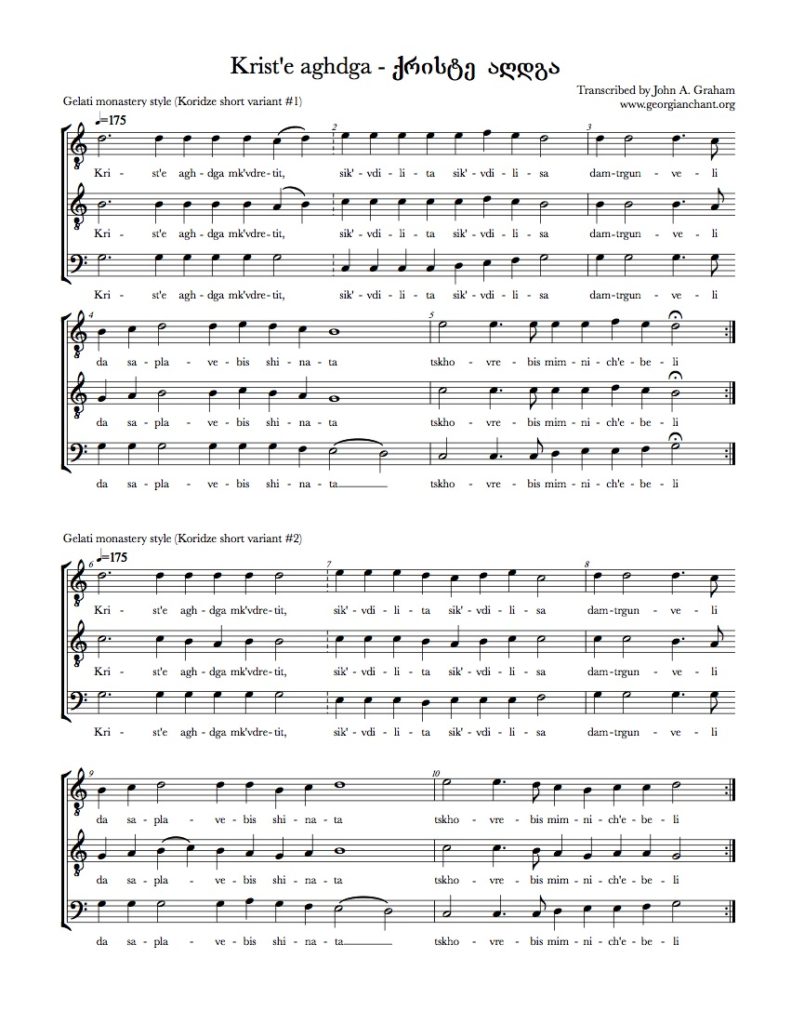
    Kriste aghdga (Koridze short variants – West Georgia)

    Pilmon Koridze (1835-1911) was a trained opera singer who starred in Italy and St. Petersburg as a bass singer. Starting in 1883 he gave up his stage career and devoted himself to transcribing Georgian liturgical chant from the last master singers around the country. The 2000+ chants that he transcribed form the basis for our knowledge of Georgian chant today.

    These two Kriste Aghdga variants were likely transcribed from singers in the Gelati Monastery area of West-Central Georgia in 1885-1886.


    Video: Koridze long variant – Gelati Monastery style (West Georgia)

    Kriste aghdga (Koridze long variant – West Georgia)

    This variant has an extended coda for the final phrase, which is an optional ending for the third time through singing it.

    In the original transcription, Koridze did not indicate any sharps or flats. I added three sharps in this transcription to avoid excessive tritone and half-step intervals, which are uncharacteristic intervals in Georgian traditional polyphony. In reality, the master singers had their own tuning system which can be heard on some old recordings.

    This tuning system included neutral thirds, sixths, and sevenths. Therefore, if we consider E to be scale degree 1, G#, C#, and D should all be sung in a neutral position (in the cents system, Georgian intervals are about 160-170 cents apart, as opposed to the 100=half step or 200= whole step diatonic system Westerners are familiar with).

    Audio: Koridze variant of kriste aghdga

    Sakhioba Ensemble (minute 3:12)


    Video: The Benia Mikadze variant (West Georgia):

    Kriste aghdga (Mikadze variant)

    Benia Mikadze (1914-1997) left a treasure of Imeretian folk songs and chants.

    He lived nearly his entire life in the small village of Khiblari in the Lower Imereti region, and was the last of his generation of singers raised in the oral tradition of singing in the family. His variants are entirely local, and were picked up from his parents, grandparents, and their friends.

    His songs and chants have been popularized by the influential choir director, Malkhaz Erkvanidze (Anchiskhati Ensemble, Sakhioba Ensemble, international workshop leader).

    Audio: Mikadze variant of kriste aghdga

    Sakhioba Ensemble (about minute 1:45)


    Video: The variant from Lechkhumi (West Georgia):

    Kriste aghdga (Lechkhmuri regional variant)

    This variant of Kriste aghdga (Christ is Risen) is from the mountain region of Lechkhumi. This region is situated along one tributary system of the Rioni River, nestled between the mountainous valleys of Upper Imereti, Racha, and Svaneti.

    Musically, this variant closely resembles that sung by Benia Mikadze (1914-1997), but also the Svanetian and Rachan variants.

    It is not frequently sung, but I did find a video performance by the Tao Choir (see video above), and made a transcription of that performance (see notation to the right).


    Video: The variant from Racha (West Georgia):


    Kriste aghdga (Rachan regional variants)

    There are several variants of Kriste aghdga (Christ is Risen) from the highland region of Racha, which neighbors the regions of Upper Imereti, Lechkhumi, and Svaneti.

    At least one variant is a round-dance. This would have been sung at the feasts following the Paschal vigil, with extra para-liturgical praise texts added to it.

    I will try to add more information here as I learn it, as well as notation!


    Audio (historical): Rachan round-dance variant of kriste aghdga

    Rachan round-dance variant, Rostom Gogoladze Choir


    Kriste aghdga (Rachan regional variant)

    This amazing recording was uncovered among historical wax cylinders from 1916. Georgian soldiers in Berlin were recorded singing several songs, and one of them was a Rachan variant of Kriste aghdga (Christ is Risen). Amazing to have these voices still audible to us today.


    Audio (historical): Rachan variant of kriste aghdga

    Rachan variant, recorded in a WWI German prisoner-of-war camp between 1916-1918.


    Kriste aghdga (Megrelian regional variant)

    This variant of Kriste aghdga (Christ is Risen), from the Samegrelo region of West Georgia, is relatively unknown. When I learn more about who recorded it or transcribed it, I will try to add more information here. In one of the videos here, Levan Veshapidze has usefully provided notation.

    Video: The variant from Samegrelo (West Georgia):


    Kriste aghdga (East Georgian variants)


    Video: Karbelashvili #2 variant – Svetitskhoveli Monastery style (East Georgia)

    Kriste aghdga (Karbelashvili variants – East Georgia)

    The Karbelashvili family preserved the oral tradition of liturgical chant in Georgia throughout the 19th century.

    During this period, the Georgian Church was under the supervision (some would call it suppression) of the Russian Orthodox Church and its appointed Exarch from St. Petersburg. Some exarchs favored Georgian Orthodox culture, frescoes, singing… but the vast majority of them did not. The seminaries were conducted in Russian, and Russian 4-part harmony chant was taught and disseminated via the seminaries. As a result, the knowledge of Georgian three-voiced traditional chant went into decline as the transmission of this music in Church institutions was usurped by Russian Orthodox cultural norms. For more on this topic, see the dissertation, “The Transcription and Transmission of Georgian Liturgical Chant” (John A. Graham, Princeton, 2015).

    Petre Karbela-Khmaladze (1754-1848)  studied East Georgian chant in the 1700s in the Davit Gareji Monastery and the Svetitskhoveli Cathedral. His son Grigol (1812-1880) was a professional chanter and taught at the Bodbe Monastery in 1860-1861, and later at the Tbilisi Seminary for a brief period. Grigol’s five sons were the last generation of highly-knowledgeable master chanters. Vasil (1858-1936), in particular, was instrumental in preserving this important school of Georgian traditional chant. After learning European notation, he personally transcribed some 500 ornamental chants. His brother Poliekvtos transcribed simple chant variants. Other composers such as Mikhail Ippolitov-Ivanov also transcribed chants from the Karbelashvili brothers in the 1880s.

    The melodies of the Vasil Karbelashvili variants are the same as the West Georgian variants, but the lower harmonizing voices are quite different. The middle voice displays the kind of ornamentation favored in East Georgia: a flowing line that passes between one chord and the next.

    There are at least two variants (if not more). Here I provide notation for “Variant #1”, and “Variant #2.”

    Performance tips:

    • The tempo should be on the faster side, between 100-120 beats per minute (quarter note), but not so fast that the middle voice passing tones seem aggressive or forced.
    • Karbelashvili chant should have a feeling like a large slow river, moving surely, steadfastedly, with pride, majesty, and inexorable inevitability towards the cadence.
    • Individual chords are not prioritized, but rather the entire motion of the phrase, sung in one breath.

    Kriste aghdga (20th c. composed variants)


    Video: The Paliashvili 6-voice arrangement from 1909 (East Georgia):

    Kriste aghdga (Zakaria Paliashvili arrangement – East Georgia)

    Zakaria Paliashvili (1871-1933) is an important Georgian composer. He is buried outside the Tbilisi Opera House, which was posthumously named after him in 1937. Paliashvili is the composer of two operas (Abselom da Eteri 1919; Daisi 1921) that are considered the foundations of Georgian opera.

    He studied with Sergei Taneyev at the Moscow Conservatory in 1903-1904, and was deeply influenced by the Smolensky-led movement to compose new sacred music for large choir based on old Russian znamenny chant melodies. Upon his return to Georgia in 1904, Paliashvili began his own arrangements of traditional melodies, using the recent publications of Karbelashvili East-Georgian chant. His arrangements were published as a “Liturgia” in 1909, and included a kriste aghdga arranged for six voiced large chorus (SSATTB).

    Unfortunately, this piece was rarely performed, as world events such as the World War and communist governments did not provide a conducive environment for the performance of sacred music. It has not been recorded by a Georgian choir.

    Very recently, however, the Paliashvili “Liturgia” has received international recognition. The video above is a performance by the Capitol Hill Chorale in Washington DC, who released the first compact disk recording of the entire Liturgia in the Georgian language, as well as the redacted score. For more information, see this article written by John A. Graham and Parker Jayne.


    Video: A popular 20th century composed variant (East Georgia):

    Kriste aghdga (Composed variant – East Georgia)

    In 1978, the new choir director of the Sioni Cathedral in Tbilisi (he later became Priest Pavle Berishvili) undertook to write a whole new set of music for the Vespers-Matins-Divine Liturgy cycle. At that time, nothing was known of the lost Georgian traditional chant, as the oral tradition was lost and the manuscripts that represented that tradition were sealed in State Archives.

    This version of kriste aghdga, and many other popular chants, apparently were written by Father Pavle. (It was quite difficult to discover this information, thank you to Levan Bitarovi for the link to this article about Priest Pavle Berishvili in Georgian).

    I don’t know if there are original transcriptions anywhere, I’ve certainly never seen them published. But I’ve transcribed some of the performances of this composed variant and attach them here (they all vary slightly, meaning that this chant has gone back into oral tradition):

    1. Monks of the Zarzma Monastery
    2. Georgian Harmony Choir (Paris)
    3. Georgian Church Choir (New Jersey, USA)


    Compare Performances:


    Video Playlist: Kriste aghdga
    (Georgian choirs)


    Video Playlist: Kriste aghdga
    (International choirs)

    Video Playlist: Kriste aghdga
    (Womens-Mixed choirs)

    Video Playlist: Kriste aghdga
    (Men’s choirs)


    We welcome your questions and comments!


  • Shen khar venakhi (You are the Vineyard) – the West Georgian variants (3/3)

    Shen khar venakhi (You are the Vineyard) – the West Georgian variants (3/3)

    This is Post 3 (of 3) on the very special chant, shen khar venakhi (You are the vineyard).

    Post 1 contains the text, translation, and other useful background information.

    Post 2 pursues the topic of performing East Georgian variants of shen khar venakhi.

    The West Georgian musical variants of the chant shen khar venakhi (You are the vineyard) deserve special attention. Because so many variants from the oral tradition exist –some five or six– it offers a wonderful chance for comparison. Through such comparison, we can learn which features of the music were fixed in oral tradition versus which features were improvisational.

    Musical Variants in West Georgia:

    There are at least seven musical variants inherited through oral tradition from West Georgia. These can be divided into two groups: those originating from chanters associated with the Gelati Monastery in central Georgia, and those originating from chanters associated with the Shemokmedi Monastery in the Gurian region in Southwest Georgia.

    Unlike in East Georgia, there are no arrangements of the West Georgian variants (to my knowledge). For a break down on the variants inherited through oral tradition, I offer the following list:


    Original variants (oral tradition)

    1. Khundadze variant (Gelati monastery style) – sung by Anchiskhati Choir
    2. Unknown variant (Gelati monastery style), recorded in manuscript H154.4
    3. Khubulava variant (Gelati monastery style)
    4. Erkomaishvili variants (Shemokmedi monastery style) – at least five variants
    5. Patarava variants (Shemokmedi monastery style), one or two variants
    A playlist with all 101+ Youtube recordings that I could find:


    Notation:

    This chant book includes four musical variants of shen khar venakhi. 

    Georgian Chant, Vol. VI

    shen khar venakhi West notation sm


    Available on Amazon.


    Characteristics of Traditional Georgian chant:

    1) Traditional chant is almost always 3-voiced, not more not less.

    2) Traditional chant is sung in “close harmony”: the dissonances are integral to the desired sound. The tension-release in the music is symbolic of our prayers and supplications to God.

    3) Traditional chants end in unison. Many Georgian chanters will confide that like the Trinity, the three voices of Georgian chant come together as One, and that is the reason that most chants end in unison.

    4) Traditional chant is organized around fixed model melody fragments that are sung in the top voice. To lose the model melody is to lose the chant, as the harmony is based on the melody.

    5) Traditional chant follows strict conventions of harmonization. The lower voices harmonize the model melodies according to local aesthetic taste, developed and vetted through centuries of oral tradition.

    6) Traditional chant likewise follows strict conventions of ornamentation. By expanding the ornamentation with “foreign” flourishes, it loses the local character developed and vetted through centuries of oral tradition.

    7) Traditional chant performance was a privilege, a guild. Master chanters trained for 5-6 years to attain proficiency in hundreds of model melodies, harmonization and ornamentation techniques, and the complex rubrics of the Orthodox rite. Thus, it is possible to imagine that upstart composers with a couple of years of Conservatory training, no matter how talented, were not immediately accepted members of the chanter’s “guild.”

    4+ Gelati Monastery variants (West Georgia):


    Performance Tips:

    There are a number of ways to perform this chant.

    The Rustavi Ensemble popularized a “bel canto” or “academic” style during the decades of the 1960s-1980s. Other choirs have made different choices.

    The Anchiskhati Ensemble sings with a raw but refined thin timbre, similar to some traditional singers recorded in the early 20th century. The Ialoni women’s ensemble, a group of former Conservatory students, has a unique timbral approach to chant, which is much brighter than the dulcet tones of the Samtavro nun’s choir, for example.

    As a choir director, one has to make choices between trying to preserve some “authentic” performance practice, and being realistic about the capabilities of one’s choir members. Calling something “authentic” is of course problematic because there was so much variation even within the known traditional-singing community in the early 20th century. That disclaimer aside, here are some suggestions.


    Sounding Georgian:

    • – One singer on the top voice
    • – One singer on the middle voice
    • – Optional number of singers on the lowest voice (good vocal balance typically demands 3-5 singers)
    • – develop individual voices to have an narrow, cutting, bright timbre
    • – develop a bass choral sound that supports the laser focus of the upper voices
    • – the “sacred” feel of the sound is in the mental and physical approach to the texts, not in any acquired vocal affect
    • – men, women, or children can sing, but it must be “close” harmony. Doubling at the octave is an imported musical feature.
    • – timbre should be natural (tenors and sopranos in their mid-range, altos and basses in their mid-range). This is why most Georgian choirs, given the choice, elect to sing TTB, or SSA, rather than mixed gender choirs.


    13+ Shemokmedi Mon. variants (West Georgia):


    Basic Structure of the West Georgian variants:

    – All three voice parts are ornamented in the West Georgian variants

    – Voice crossings between the upper voice parts are common, as in all ornamental West Georgian chant.

    – the ornamentation techniques are similar to the ornamentation techniques employed to express local folk songs.

    – the phrase structure of the West Georgian melodies is more complex than its East Georgian counterpart. They are also different melodies. The melodic phrases follow an order like this: ABC, ABC, Final phrase (where ABC are the three primary musical phrases of each verse). Phrase “A” is quite short, and serves as a clarion call. Phrases “B” and “C” are much longer.

    – Other texts are set to these very same model melody fragments. In the manuscripts, the West Georgian shen khar venakhi is often transcribed next to other chant texts associated with the liturgical ceremony of matrimony. These texts are set to the very same melodies, thus the music is not unique to the shen khar venakhi text.

    – The Gelati monastery variant is characterized by harmony including intervals of a third, fifth, and octave below the melody.

    – The Patarava and Erkomaishvili variants, representing the Shemokmedi monastery tradition in the region of Guria, display different types of harmonic choices. In these variants, the lower voices typically harmonize the melody with intervals of a whole tone, fifth, octave, and ninth.


    Performing the West Georgian variants:

    Voice Crossing title page– The best advice here is to simultaneously listen to folk music from the Gurian region while listening to Gurian liturgical music. There is no legato, no sliding between notes. Every note is firmly placed in a precise place, like letters in a vertical row of mail slots.

    – There are voice-crossings in the West Georgian variants which provide an opportunity for the middle voice timbre to shine. For more on voice-crossings, see the article: “Without Parallel: Voice-Crossing and Textual Rhythm in West Georgian Chant” (2013).

    – There is a playfulness to West Georgian chant that must be discovered.

    – There is less emphasis on the long sustained line in West Georgian chant (than its East Georgian counterparts), more interest in ornamenting a long note than holding it.

    – It’s rare nowadays to hear West Georgian variants performed with European choral technique, but it’s entirely possible (the Rustavi Ensemble sang it that way in the Soviet era). The Basiani Ensemble, for example, tends to sing the Erkomaishvili (West Georgian) variant in trio format, as they would sing ornamental Gurian regional folk songs.


    We welcome your questions and comments!
     

  • Shen khar venakhi (You are the Vineyard) – The East Georgian variants (2/3)

    Shen khar venakhi (You are the Vineyard) – The East Georgian variants (2/3)

    This is Post 2 (of 3) on the very special chant, shen khar venakhi (You are the vineyard).

    Post 1 contains the text, translation, and other useful background information.

    Post 3 pursues the topic of performing West Georgian variants of shen khar venakhi.

    Musical Variants in East Georgia:

    In the chant tradition of East Georgia, only a few versions of the chant shen khar venakhi have survived.

    In principle, there is only one variant from the oral tradition: that inherited and transcribed by the Karbelashvili brothers in the 1880s (here referred to as the Karbelashvili variant). They published this variant in 1898. In the manuscripts however, there are other copies of the chant with variations in the middle voice, showing that specific notes varied from one performance to another.

    In 1909, a Catholic composer named Zakaria Paliashvili arranged the chant for six-voice large chorus (SATTBB). Hardly anyone sings this large-chorus variant, but in 2014, the Capitol Hill Chorale (Washington DC) made what is very possibly the first recording.

    In the 1950s, the Palishvili variant was reduced back to a 3-voiced format, and popularized by the Rustavi State Ensemble. This variant is today called the “Paliashvili” variant, and is the most popular globally.

    The Paliashvili variant also appears in other arrangements. Perhaps the most common is the “Georgian Cherubic Hymn:” – a setting of the Orthodox Christian text “Let us the Cherubim” to the music of the Paliashvili variant of shen khar venakhi. This setting was originally arranged in the 1990s into Russian, but has since been translated into English and others languages.

    To Recap:

    A playlist with all 101+ Youtube recordings that I could find:


    Notation:

    This chant book includes four musical variants of shen khar venakhi. 

    Georgian Chant, Vol. VI

    shen khar venakhi West notation sm


    Available on Amazon.

    Original variants (oral tradition)

    1. Karbelashvili family originals (Svetitskhoveli Cathedral, Kartli region, East Georgia), two variants

    Arranged variants:

    1. Paliashvili arrangement for SATTBB voices (1909)
    2. Rustavi Ensemble arrangement based on the Paliashvili for TTBB voices (1960s)
    3. Russian arrangement with text from the Cherubic hymn (1990s)
    4. English translation of the Cherubic hymn arrangement (1990s), sung widely in the Orthodox Church of America


    The Paliashvili variant

    The Paliashvili arrangement (1909) is notable because it was the first time a composer published a creative interpretation of an original chant. Other Russian-trained composers such as Ippolitov-Ivanov, Klenovsky, and Sulkhanishvili had all dabbled in arranging chants. But Paliashvili published his arrangements under the title “Liturgia.”

    ACR_Vol56_No1_FINAL title pageFor more on the Paliashvili arrangements, see this article: “The Rediscovery of Zakaria Paliashvili’s Liturgy of St. John Chrysostomos” (2014).

    Paliashvili, a Catholic organist trained in the Moscow Conservatory, was criticized by the Karbelashvilis – a group of five brothers who were Orthodox priests and inheritors of the East Georgian chant tradition. Originally, the Karbelashvili brothers had helped Paliashvili learn traditional Georgian chant (after he returned from studying with Sergei Taneyev in the Moscow Conservatory in 1903), but later, they publicly denounced his works, citing his intention to “break the form” of traditional chant.

    Paliashvili defended his work, saying he modernized the traditional three-voiced form for large chorus, but maintained the melody.

    The tension in this debate is curious. What exactly is the “form” of traditional chant that Paliashvili broke? Perhaps this is worth exploring through a direct video comparison, with notation:


    The “Paliashvili” 3-voice variant

    Shen Khar Venakhi Rustavi

    The 1909 Paliashvili arrangement for SATTBB (Soprano, Alto, 2 Tenor parts, 2 Bass parts):


    Compare: the Karbelashvili variant (oral tradition), with notation:

    Characteristics of Traditional Georgian chant:

    1) Traditional chant is almost always 3-voiced, not more not less.

    2) Traditional chant is sung in “close harmony”: the dissonances are integral to the desired sound. The tension-release in the music is symbolic of our prayers and supplications to God.

    3) Traditional chants end in unison. Many Georgian chanters will confide that like the Trinity, the three voices of Georgian chant come together as One, and that is the reason that most chants end in unison.

    4) Traditional chant is organized around fixed model melody fragments that are sung in the top voice. To lose the model melody is to lose the chant, as the harmony is based on the melody.

    5) Traditional chant follows strict conventions of harmonization. The lower voices harmonize the model melodies according to local aesthetic taste, developed and vetted through centuries of oral tradition.

    6) Traditional chant likewise follows strict conventions of ornamentation. By expanding the ornamentation with “foreign” flourishes, it loses the local character developed and vetted through centuries of oral tradition.

    7) Traditional chant performance was a privilege, a guild. Master chanters trained for 5-6 years to attain proficiency in hundreds of model melodies, harmonization and ornamentation techniques, and the complex rubrics of the Orthodox rite. Thus, it is possible to imagine that upstart composers with a couple of years of Conservatory training, no matter how talented, were not immediately accepted members of the chanter’s “guild.”

    15+ performances of the East Georgian “Karbelashvili variant” (oral tradition):


    General Performance Tips:

    There are a number of ways to perform this chant.

    The Rustavi Ensemble popularized a “bel canto” or “academic” style during the decades of the 1960s-1980s. Other choirs have made different choices.

    The Anchiskhati Ensemble sings with a raw but refined thin timbre, similar to some traditional singers recorded in the early 20th century. The Ialoni women’s ensemble, a group of former Conservatory students, has a unique timbral approach to chant, which is much brighter than the dulcet tones of the Samtavro nun’s choir, for example.

    As a choir director, one has to make choices between trying to preserve some “authentic” performance practice, and being realistic about the capabilities of one’s choir members. Calling something “authentic” is of course problematic because there was so much variation even within the known traditional-singing community in the early 20th century. That disclaimer aside, here are some suggestions.


    Sounding Georgian:

    • – One singer on the top voice
    • – One singer on the middle voice
    • – Optional number of singers on the lowest voice (good vocal balance typically demands 3-5 singers)
    • – develop individual voices to have an narrow, cutting, bright timbre
    • – develop a bass choral sound that supports the laser focus of the upper voices
    • – the “sacred” feel of the sound is in the mental and physical approach to the texts, not in any acquired vocal affect
    • – men, women, or children can sing, but it must be “close” harmony. Doubling at the octave is an imported musical feature.
    • – timbre should be natural (tenors and sopranos in their mid-range, altos and basses in their mid-range). This is why most Georgian choirs, given the choice, elect to sing TTB, or SSA, rather than mixed gender choirs.


    75+ performances of the popular East Georgian “Paliashvili variant”


    Basic Structure of the East Georgian variants:

    • – The (famous) East Georgian variant of shen khar venakhi has a very simple musical structure.
    • – Of its five textual phrases, the first four (and a half) are sung to the same melodic fragment. The melody can be heard in the top voice. This melody fragment appears elsewhere in the canon of thousands of Georgian chants, specifically in the melodies assigned to the genre of troparion in Tone 6.
    • – The final musical phrase of shen khar venakhi describes a simple cadential formula common to many East Georgian chants.
    • – The bass voice harmonizes the melody at the interval of an octave or a fifth. Its own linear movement is mostly through step-wise motion to neighboring pitches.
    • – In the beginnings of the phrases, the bass voice tends to move in counter motion to the melody, much like an accordion stretching and pressing back together again.
    • – At the medial and phrasal cadences, the bass voice tends to move in parallel fifth motion with the melody.
    • – The middle voice is at liberty to fill the space between the outer voices with moving notes. In many East Georgian chants, the middle voice sings the same number of notes as the outer voices. But in shen khar venakhi, the middle voice sings twice as many notes. Thus, to sound good, the tempo of the chant must be slowed down so that every middle-voice note can be heard (see performance tips below).

    Performing the East Georgian (Karbelashvili-Paliashvili) variants:

    – while the middle voice has many of the moving notes, it is in fact a harmonizing voice! The model melody is sung by the top voice. The middle voice must be playful, spontaneous, and make use of potential variations in its harmonizations of the melody. This can be accomplished by teaching multiple cadential formula harmonizations to the middle voice, and letting them experiment with which one they will use for any given cadence. These kinds of “small freedoms” excites and drives the chant, as the singers feel free to be creative in real time performance.

    – Georgian choirs tend to perform the Karbelashvili variant with Georgian timbre and vocal technique, while singing the Paliashvili arranged variant (1909) with European choral technique, which is a curious conflation of repertory and performance style that I explored in this article.

    – Recently, the Paliashvili variant (as reduced by the Rustavi Ensemble in the 1960s) was published in the United States. It is available for SATB four-voiced choirs (soprano-alto-tenor-bass) with the tenor-bass doubled at the octave, and/or three voiced variants for SSA choir, or TTB choir.

    – Typically, performers sing this variant at about 30 beats per minute per syllable (in this notation, quarter note = 60). In my opinion, however, the chant was most likely sung at twice that speed. If one compares this chant to others from the East Georgian repertory that are more syllabic in terms of the number of notes per syllable (dideba maghalta shina), each syllable is sung at about 60 beats per minute.

    – But in shen khar venakhi, because the middle voice has so many notes, choirs tend to sing the chant slower and slower (the Rustavi Ensemble popularized a very slow tempo for this chant). Note, such highly ornamented middle voice parts only occur in the transcriptions of Vasil Karbelashvili, and not, for example, in the majority of East Georgian transcriptions from other figures such as Vasil’s brother Polievktos or nephew Pilimon.

    – Some international choirs have experimented with singing the Paliashvili variant faster, but the result has not been well received. It sounds rushed when multiple singers are racing through the middle voice. The middle voice should be practiced in parallel thirds to the top voice, and then the ornamental passing tones added in later. If it can sound like a playful after-thought, so much the better.

    – In my opinion, the best tempo for use in a liturgical service is achieved by the Anchiskhati Choir singing the Karbelashvili variant (see video above, or click this link).


    We welcome your questions and comments!
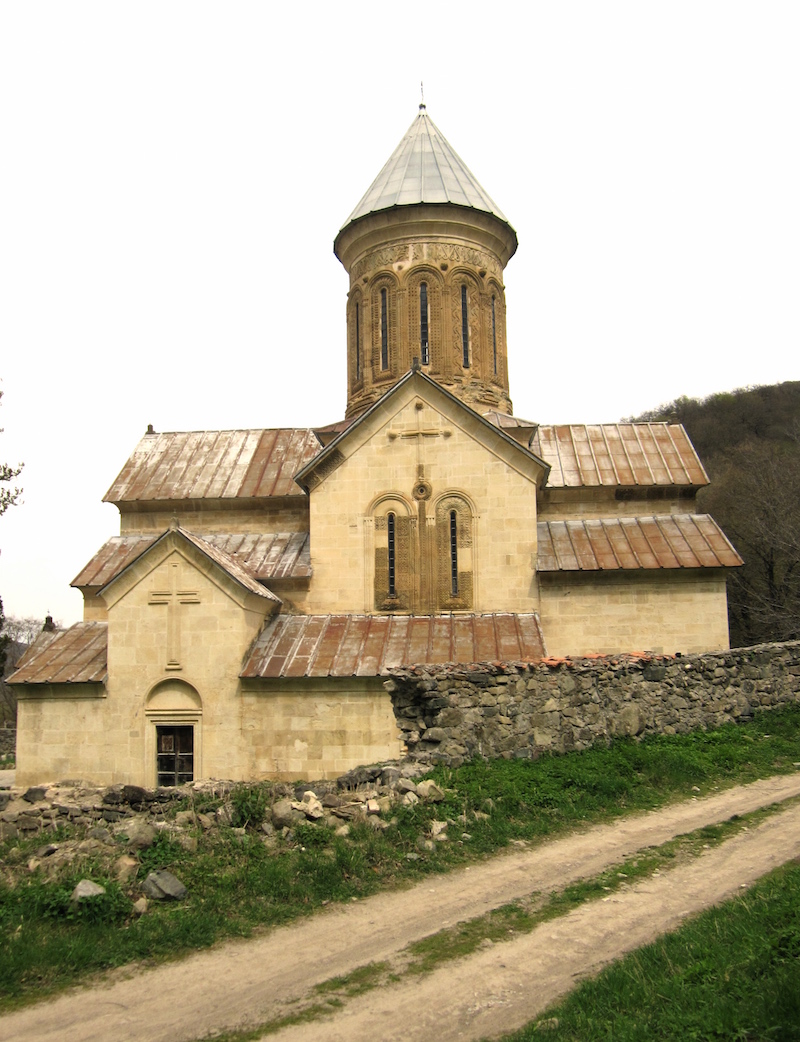
     

  • Annunciation in Georgia (April 7th)

    Annunciation in Georgia (April 7th)

    For the feast of the Annunciation, we sang the troparion “Today is the Crown,” the heirmos “Worthily Gabriel Announced” and many other chants. I was only able to capture our performance of the chant ghirsad gabriel (Worthily Gabriel Announced), however, so here it is:


    This variant was recorded by master chanter Artem Erkomaishvili on cassette tape in 1966. It was transcribed into Western notation and published in 2006 by Davit Shugliashvili.

    The troparion is rare. The text is set to Tone 4 melodies, that is, phrase-length melodic fragments that are uniquely assigned to the troparion genre, and Tone 4. These melodies are not sung in other tones, or other genres. As such, the melodies are well known to chanters, who sing dozens of texts to these same model melodies throughout the calendar year.

    But the chant dghes tskhovrebisa, only performed for the feast of the Annunciation once per year, is not well known. Not many choirs sing it or have recorded it.

    As a result, we decided to record it. Last year, the Yale Georgian Chant Group performed the variant recorded by Artem Erkomaishvili in 1966.


  • Shen khar venakhi (You are the Vineyard) – Georgia’s beloved chant (1/3)

    Shen khar venakhi (You are the Vineyard) – Georgia’s beloved chant (1/3)

    The chant shen khar venakhi (You are the vineyard) merits a special post.

    It seems to be everywhere! On television, at weddings, funerals, high school concerts in the USA, Ivy League a cappella concerts, dinner parties in Tbilisi… It is undoubtedly the most well known chant from Georgia, and the most beloved.

    But why this chant? What is its story? Who sings it and why? Is there something in the music itself that is appealing, or perhaps the text?

    Read this article to find out!

    This is Post 1 (of 3) on the very special chant, shen khar venakhi (You are the vineyard).

    Post 2 is a full discussion of the East Georgian variants, especially the popular “Paliashvili” arrangement, and including a playlist of 65+ performances.

    Post 3 pursues the topic of performing West Georgian variants of shen khar venakhi,
    and understanding the oral tradition that they represent.

    A playlist with all 101+ Youtube recordings that I could find:


    NOTE: the videos of shen khar venakhi performances on this page are organized into a series of special playlists categorized by: general playlist (above); international/Georgian choirs; women’s, men’s, childrens’ groups, and instrumental arrangements.


    The Text:

    Shen khar venakhi akhlad aqva vebuli
    norchi ketili edems shina nerguli
    alva surneli samotkhesa mosruli
    ghmertman shegamko vervin gjobs kebuli
    da tavit tvisit mze khar gabrts’qinvebuli.


    …and Translation:

    You are a vineyard newly blossomed.
    Young, beautiful, growing in Eden,
    A fragrant poplar sapling in Paradise.
    May God adorn you; no one is more worthy of praise.
    You yourself are the sun, shining brilliantly.


    20th Century Popularity:

    Shen khar venakhi was popularized during the height of the Cold War. The Gordela Ensemble and then the Rustavi Ensemble sang two different musical versions of the text in the late 1960s. The words are para-liturgical, and don’t explicitly mention Christ, the Theotokos, or any other overt religious theme.

    In reality, the text is very Orthodox Christian: it’s a praise text glorifying the radiance of the Virgin Mother, though it doesn’t specifically name her. Soviet authorities apparently accepted its careful designation in the 1960s as a “Chorale,” allowing its performance on stage and at weddings around the Soviet Union.

    It is said that King Demetre (1093-1156), who was a known poet, authored the text of shen khar venakhi (near the end of his reign, the king took the monk’s name Damiane, and moved to the remote Davit Gareji monastery complex to be a hermit monk).

    In Georgia, the chant has both a secular life and a religious life. It’s secular life persists on its popularity as an informal national anthem among the general population. During times of national crisis or tragedy (the 2008 war), or collective triumph and joy (almost every Georgian wedding), this is the song that is requested and sung.

    Notation:

    This chant book includes four musical variants of shen khar venakhi. 

    Georgian Chant, Vol. VI

    shen khar venakhi West notation sm


    Available on Amazon.


    Shen khar venakhi has also been reclaimed by religious singers in the Post-Soviet era, who perform its many variants as often as possible in para-liturgical settings such as funerals, weddings, or waiting for communion in the Divine Liturgy (the text is not part of the formal liturgical canon). The ways in which singers choose to perform the chant has much to do with these diverse situations and audiences, as discussed below.


    Compare International groups with Georgian groups

    55+ International groups:


    And 55+ Georgian groups:


    The Globalization of shen khar venakhi:

    The Yale Russian Chorus (YRC) first popularized the hymn outside of Georgia, after learning it in 1968 from members of the Rustavi Ensemble at a concert after-party at a Budapest hotel (fascinating back story to this event).

    The variant that they learned was a three-voiced arrangement of an arrangement… a reduction of the six-voice Paliashvili arrangement published in 1909. I’ve written about more thoroughly about the sources of this chant, and its transmission through the 20th century in the academic paper, “You are the Vineyard: Contemporary Performance Aesthetics in Georgian Orthodox Chant” (2009).

    Shen khar venakhi was performed and recorded multiple times by the YRC after 1968. Alumni spin-off groups such as the Kartuli Ensemble (formed in 1991), the Kavkasia Trio, and many choirs around Europe and the United States also begin singing shen khar venakhi such as Kitka, Marani, Futen, Village Harmony, Darbazi, Princeton Georgian Choirs, Maspindzeli, etc.

    In recent years, music scores for the Paliashvili variant from East Georgia (see Post 2, this series) has become abundantly available, leading to an explosion of performances by high school and amateur choirs around the world.

    Suffice to say that almost every young Georgian learns this chant, and increasingly it has come to represent Georgian polyphony for tens of thousands of singers around the globe.


    …enjoy these playlists of unique performances of shen khar venakhi:

    33+ Women’s or Mixed groups singing…


    63+ men’s choirs from around the world


    Children’s groups perform shen khar venakhi:


    Shen khar venakhi on instruments!


    We welcome your questions and comments!
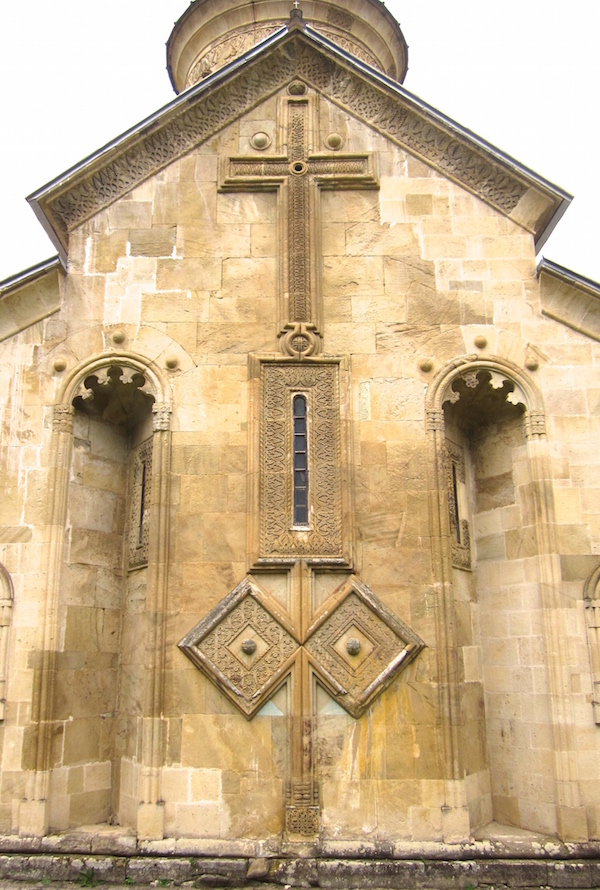
     

  • Singing for the Saints at Betania Monastery

    Sometimes in Georgia, it’s hard to get any work done. The culture demands a more nuanced, flexible approach to life than just adhering to 8-hour work days. Here’s one example that came up. Late Sunday night, a friend called and said,

    “Did you know that tomorrow is the feast day of the Betania saints? There will be a liturgy in the morning, and they’re asking for chanters. Can you come?”

    Of course I can come! I hadn’t been back in years. How could one turn down such an opportunity?

    Monday, February 21st. Four of us chanters met at 8am to begin our journey. After winding around for an hour in the hills, we finally skidded and slid down the treacherous ice patches passing for a road to the monastery (the car would never make it out that day, we had to get other rides home). The sun gleamed off the snow, and the bright yellow sandstone of the church. I hadn’t forgotten any details, but the beauty of the place overwhelmed me once again.

    In 2005 and 2006 I sang the Easter all-night-vigil service there, and my memories of my own spiritual journey at the time are still strong. I had memorized several chants there in all three voice parts, including aghdgomisa dghe ars, the first heirmos of Pascha, a chant I still sing often.

    As we still had a half hour until the service, we stomped around outside in the snow, trying to stay warm, throwing a few snowballs, and reading the captions on the graves of the saints buried just outside the East end of the monastery. During the early decades of the Soviet period, Ioane Maisuradze (†1957) and Giorgi-Ioane Mkheidze (†1960) lived at the monastery as monks, continued the work of rebuilding the failing cupola, and became revered spiritual men in their later years. To read about their lives, see this link. Today we honor them with our chants, and ask for their intercession.

    Frescoes of Queen Tamar (12th century)
    Frescoes of Queen Tamar (12th century)

    Betania Monastery is located about 8 miles up a forested ravine outside of Tbilisi, but the old footpath has long since over grown from lack of use. The monastery is situated such that enemies couldn’t see it from any of the surrounding hills, tucked near to the bottom of the steep ravine, so it was spared many of the ravages of Tbilisi over the centuries. It contains one of the rare original frescoes of the 11th-12th century monarch, Queen Tamar.

    The bell started ringing. Making our way inside the dim lit church, one couldn’t help but notice the two large wooden sarcophagi in the middle of the sanctuary space (see video below). A beam of light from the south apse clerestory windows shone down across them. The relics of the two saints were covered with embroidered white shrouds, flowers draped on all sides.

    Betania Monastery Plan, Prince Grigory Gagarin (1847)
    Betania Monastery Plan, Prince Grigory Gagarin (1847)

    We chanted the service, our bones numb from the chill penetrating our feet from the unheated flagstones. During breaks in the 4-hour liturgy, we filed outside to stamp our feet and praise the sun for warming our frozen bodies. Outside it was probably 30 degrees Fahrenheit, inside probably 20. At the end of liturgy, we venerated the relics, then filed outside for a paraklesis, a small addendum service, which we sang outside each wall of the church (see videos above).

    * * * * * * * * *

    To get to Betania, rent a taxi driver as the road is impossible to find on one’s own. A former road through Tskneti is under repair. The only road leads from Freedom Square up to Kojori, around towards Manglisi, above Kiketi, and down the Betania road. The Betania road needs 4×4 capability, otherwise it is a one hour walk from the Kiketi road above. Do not attempt to drive the road in icy or muddy conditions.

    UPDATE: As of January, 2020, the road through Tskneti is now re-opened to traffic. This is again the quickest and easiest way to get to Betania Monastery from Tbilisi.

  • Chant in Anchiskhati basilica, Tbilisi

    Chant in Anchiskhati basilica, Tbilisi

    Yesterday, I had the fortune to sing liturgical chants with the Anchishati Choir, in the Anchiskhati Church in Tbilisi.


    I had gone to the church to attend a wake for my friend’s father, who had passed away. The scene was like this: men stood around outside the sixth century stone church in small groups, talking quietly. (When I arrived, I chatted with one choir member, Gocha, and was reminded of the passage of time when he mentioned that his eldest was already 11 years old: she had been 2-3 weeks old when he and the Anchiskhati choir first came on tour with me to the United States in the fall of 2005. How time flies). Inside the church, rows of black-clad ladies were seated on either side of an open coffin, a white shroud covering the body within. There are very few windows, so the light mostly comes from the doorway, and from a few candles stuck into sand trays in front of gold icons hung on the pillars and walls. Following protocol, I walked counter-clockwise around the coffin, nodding gravely to those that looked at me, and shaking the hands of the male relatives.


    The 6th century Anchiskhati Church in Tbilisi, Georgia, often visited on John Graham Tours.
    Anchiskhati Church, 6th century, Tbilisi, Georgia

    As I was walking out of the church, more members of the choir started arriving, and they invited me back inside to chant. I had it in mind to go do some work, so at first I politely declined. But thank goodness my head cleared of this momentary insanity, and I marched my body right back in there. Members of the Anchiskhati Ensemble, the best Georgian chanters in the world, had just invited me, an American, to come and chant with them in this sixth century basilica!! And didn’t I first come to Georgia because of my love for this music? Sometimes I take it for granted. It’s moments like this where I need to take a step back and realize what a charmed chapter in life I’ve been living these past 13 years.


    The sixth century Anchiskhati church in Tbilisi, Georgia

    We started with the East Georgian variant of movedit taqvanis vtset (Come, let us worship). No other middle voice singers had arrived, so everyone looked at me. I know the Gelati monastery variant by heart, but not the East Georgian variant. No problem, they had notation in the choir stall, so I could read from the score. What is it like to sing in the Anchiskhati Church? Well, the acoustics are not the best in the country, but neither are they bad like most of the new reinforced concrete made churches that are springing up around the country. The sandstone blocks in the foundations date from the 6th century, though the current brick pillars and roof was rebuilt in the 17th century. The faded frescoes date to the Russian period in the 19th century. What is amazing about singing in the Anchiskhati Church is singing with this choir, with these people, with this tradition. This is where the revival of Georgian polyphonic chant began, back in 1990. For my generation of chanters, these are the hallowed halls where the most famous chant choir sings. And here I was, singing with them.


    Anchishkhati Church interior

    More singers arrived and we sang many many chants, including the famous theotokion hymn shen khar venakhi (You are the vineyard). This was an interesting choice because this hymn is most often associated with weddings, or at least that had been its association for the second half of the Soviet period, when this was one of the first hymns that was popularized and accepted in that period of religious cultural suppression. The words are para-liturgical, and don’t explicitly mention Christ, the Theotokos, or any other overt religious theme. Therefore, Soviet authorities apparently accepted its careful designation as a “Chorale” in the 1960s by the Rustavi Choir, who re-popularized the chant. In reality, it’s a descriptive text that is very Georgian Orthodox: it’s about the Mother of God being glorious and radiant.


    Here is the translation:

    You are a vineyard newly blossomed.
    Young, beautiful, growing in Eden,
    A fragrant poplar sapling in Paradise.
    May God adorn you. No one is more worthy of praise.
    You yourself are the sun, shining brilliantly.


    As the choir sang, I took a short video to capture the mood (see above). This chant doesn’t fit into any specific liturgical service, but it is possibly the most well known and most popular chant in Georgian society. It is sung for weddings and joyful occasions, and indeed for funerals and moments of deep societal pathos like the 2008 war with Russia. I’ve written about this chant elsewhere here.


    After singing this and many other hymns, a priest came and we began the service for the dead. About 50 people stood near the coffin, listening to the priest intoning the words, the choir responding with upalo shegvitsqalen (Lord have mercy), and tsmindao ghmerto, tsmindao dzliero, tsmindao ukvdao, shegvitsqalen chven (Holy God, Holy Almighty, Holy Immortal, have mercy on us). Outside, more than a 150 people had gathered by now, all talking away in their own small group conversations. It’s tradition to be at the wake, to make an appearance, to show respect. But it is not required to mourn. I didn’t stay for the whole service, but I know that later, after the body is lowered into the ground, covered, and the final prayers are said, many of these guests will gather around long banquet tables to break bread, stand to raise glasses of wine, and make toasts in honor of the life lived, the family members, the honor of the clan, and to tell stories and be sad, and merry, and solemn, and light-hearted, all together and at once in community. Another afternoon in the cultural life of Georgians.


  • Kashweti Church – Great Lent begins

    Kashweti Church – Great Lent begins


                Today is Forgiveness Sunday at the Kashweti Church of St. George, a major church in downtown Tbilisi that welcomes some 300-500 parishioners through its hammered metal doors every service, with dozens more passing through every hour of the work week to pray in front of large icons of the Theotokos or snap discrete photos of the extraordinary East apse by 1930s avant-garde wall paintings by artist Lado Gudiashvili.

               This Sunday, as the liturgy concludes, the two choirs of young male singers have a pressing matter on their minds: tomorrow Great Lent begins, and with it, the responsibilities of the choir suddenly increase. Every day this coming week, the Canon of Repentance of Andrew of Crete will be performed at special 4pm Great Compline services.

    The music for this service in the Georgian tradition requires the singing of complex polyphonic settings, with new melodies and harmonies to rehearse. During the singing of these texts, no liturgical action potentially distracts attention from the choir’s potential mistakes, rather, the entire clergy and parish meditate silently to the penitentiary texts of St. Andrew: any musical mistake will not only be immediately evident, but will distract from the prayerful atmosphere of these special services. Thus, an immediate rehearsal is called and excitement builds to sing this new repertory. Everyone in the chant community knows of its extraordinary beauty, because of a few independent examplars that are often recorded, but almost no choirs in the country sing the entire canon.

    VIDEO: Aghsavali Ensemble performs Uteslod midgomili hshobs (Ineffable is the childbearing), 9th heirmos of the canon of St. Andrew of Crete (March 2nd, 2017), at the Kashweti Church of St. George in Tbilisi, Georgia


                We begin the rehearsal with the kondakion from the canon: “My Soul, My Soul, why are you sleeping?” one of the hymns made famous by the impeccable recordings of the Anchiskhati Church Choir in the recent Post-Soviet decades. With this melody in mind, we are ready to go through the eight heirmoi, simple and ornamented refrains, and assorted other chants. The troparia texts will be read by the deacons, we’re informed, and that’s a good thing because there are some 250 of them!

                Music notation for this canon, as well as all of Great Lent and Pascha, can be found in Volume IV of Kartuli Galoba, edited by Malkhaz Erkvanidze, John Graham, et. al.

                The melodies for the heirmoi texts are long and complex, the harmony voices even more ornamented. We can surmise from the written transcriptions of this music that only master chanters would have been capable of performing these difficult chants without notation of any kind. Indeed, the music was performed for transcriber Pilimon Koridze in 1885 by three choir directors from different regions of West Georgia who were brought together specifically for the purpose of recording the most unique, rare, and ornamental variants of what is collectively called “Gelati Monastery School” chant (Razhden Khundadze from Kutaisi, Dimitri Chalaganidze from Martvili, and Ivliane Tsereteli from Upper Imereti).

                As we sing through one chant after another, poring over the printed notation, one can’t help but be impressed with the interweaving playfulness of the three voice parts. Where the melody singer in the top voice holds a long note, the middle voice fills in the space with a series of ornamental patterns that shift the harmony from one chord to another. The bass voice anticipates these shifts, and shifts up or down in step with both of the upper voices.


    Example 1. Uteslod midgomili hshobs (Ineffable is the childbearing), musical phrasing

                The most musically profound moments come at moments of textual importance: on the words ghmrtisa shoba stsvalebs… (the Lord’s birth changed…), for example, which comes in the middle of the ninth heirmos of the canon (Ineffable is the childbearing), the top voice slowly rises to hold a long note on the word “Lord” (see Example 1). At this moment, in order to sustain energy under such a long held note and to propel the chant forward, the middle voice fills the octave with a wonderful rising harmony line. Then as all three voices build an extraordinary phrase in anticipation of the musical climax on the word “changed”, the bass voice adds a layer of rhythmic complexity by syncopating its movements with the harmonic rhythm of the upper voices.


                These elements show the virtuosity of a class of singers that no longer exist today, a group of master chanters able to create complex harmony in real time not by singing simple parallel harmony, or just duplicating past material, but using their gifts as improvisers perfected in the sphere of folk music to magnify the musical melody of the chant.


    John A. Graham

    Member of the Aghsavali Ensemble since 2009


  • The stone-carvings at Nikortsminda cathedral

    The stone-carvings at Nikortsminda cathedral

    The monastery church of Nikortsminda is one of the most unique churches in the Caucasus region.

    • For starters, it is built high in the Rachan highland region, making it difficult to access or find unless one ventures off the traditional tourist routes.
    • Second, the richness of its decor at such an early date (constructed from 1010 to 1014 AD) suggests its royal patronage – Bagrat III was then king of West Georgia.
    • Third, the plan of the church is very unique: from the outside it looks like a cruciform type cross-dome church plan, but on the inside it is revealed to built on a hexagonal design with six equal-spaces columns supporting a circular dome.
    • Fourth, the 17th century frescoes inside are exquisite, but it is the exterior stone carving that makes Nikortsminda famous: these are some of the most carefully designed and executed bas-relief sculptures of any in the whole Caucasus.

    The carvings depict biblical scenes such as the Transfiguration, Judgement Day, the Raising of the Cross, as well as important saints and other figures.


    Directions to Nikortsminda

    To get to the Nikortminda monastery, take the road to Racha off of the main Tbilisi-Kutaisi highway towards the town of Terjola and Tqibuli. The turnoff is about 2.5 hours West of Tbilisi, and half hour to the East of Kutaisi.

    Once on this road, one climbs up a series of switchbacks to a beautiful reservoir near the coal-mining town of Tqibuli before traversing another huge limestone ridge to arrive in the region of Racha. There, another reservoir and vast forests greet the eye.

    Towards the region’s administrative center, Ambrolauri, one comes across the fast-moving Rioni River, which plunges through a gouge in the limestone before rushing past Kutaisi into the flat floodplains of Samegrelo. Nikortsminda is situated just 15 minutes before reaching Ambrolauri, just off the road to the right (can’t miss it). Give yourself 4 hours of driving time from the outskirts of Tbilisi, two hours from Kutaisi, driving fast.


  • Gergeti Sameba Monastery

    Gergeti Sameba Monastery

    The monastery of Gergeti Sameba in the Kazbegi highlands is one of the most iconic places one can visit in the whole South Caucasus.

    It is one of the most visited sites, most photographed sites, and most beloved sites of Georgians and tourists alike. Once one arrives, it’s not difficult to understand why: the 13th stone church stands atop a cliff some 1500 feet above the village of Gergeti, with the majestic 15,500 conical peak of Mount Kazbegi rising directly behind it.

    Every year hundreds of people climb to the top of Mount Kazbegi, a trip of some 4-5 days that requires 24 hours of acclimatization at a weather station at 12,000 feet altitude. But hundreds of thousands of people climb to Gergeti Sameba monastery. They go to give prayers, they go to breathe fresh air, they go to imagine life hundreds of years ago… and many go with no reason at all. It is simply the pull of the mountains. The pull to climb higher, go further, see beautiful landscapes, and feel what it means to be alive.


  • Martvili Canyon Tours

    The Martvili Canyon is a natural wonder in the Samegrelo region of Georgia, near the town of Martvili. Also called the Gachedili Canyon, it is about a 45 minute drive from the city of Kutaisi in West Georgia. In 2016, the Georgian government spent more than $500,000 on rebuilding the infrastructure around the canyon in order to make this growing tourist destination safer. The site had been virtually forgotten except by locals until the early 2000s, when more and more tourists started posting photos and videos on the internet.

    The incredible natural beauty of the secluded coves and azure-green water of the stream as it flows through the hidden canyon appealed to adventurers streaming into the Caucasus from Europe. In recent years, the site became unsafe as daredevils jumped from waterfalls, went swimming in high water, or went spelunking or river scuba-diving without proper equipment. Injuries and even deaths prompted the government to crack down with new regulations placed under the aegis of the Agency of Protected Areas (APA).

    The government’s attempts to streamline access to the site (through an electronic ticketing system) will increase safe access for tourists, but also decrease the hidden and secretive nature of the canyon – the hidden gem of Martvili.

    A footpath with bridges over, in, and around the short canyon will be a welcome addition for all visitors, however.

    Small streams running through the limestone near the town of Martvili have carved a series of spectacular caves and canyons. Some are accessible by raft, others have boardwalks built inside. Experience the natural wonders of Georgia!

    Prices are 17 gel/adult entrance ticket, plus 15 gel/adult to take a raft ride up the river canyon for 15 minutes.


  • Black Sea Coast (from the Botanical Garden)

    Black Sea Coast (from the Botanical Garden)

    The Black Sea coastline from the heights of the Batumi Botanical Gardens stretches more miles to the north towards the port of Poti, and south towards the port of Batumi. Greek, Roman, Byzantine, Ottoman, and of course Georgian soldiers have used these heights to scour the horizons for incoming ships for centuries, as evidenced by the nearby Roman-Greek fortresses of St. Peter at Tsikhisjiri and Apsaros at Gonio.

    Black Sea coast

               Nowadays, the Batumi Botanical Gardens inhabit the hilltop folds. Founded in the 1880s by Nikolayevich Krasnov, the history of the Gardens are very interesting. The trees and plants imported from around the world over the last century grow incredibly well, some better than their native environments!

               On a recent walk through the gardens, a local pointed at a particular tree and said, “do you see that?” We wondered what she was pointing out, and asked her to explain. “Half way up that palm tree, there’s a pine tree growing!” We looked closer and one by one, we finally saw it: a single pine branch, not less than 15 feet long, was growing out of some of the shag bark of the old palm tree. A bird must have brought the seed, we marveled, or maybe some crazy botanist grafted it there, speculated another.

                Further down the trail, we found a large tree fallen across a small ravine. It was such a large trunk, 20 people could walk across the ravine as if across a bridge, all at the same time. Even more amazing, a dozen smaller trees were growing straight up out of the fallen trunk, offering a series of hand holds for those venturing out on the trunk.